
Reviewed · THE ROCKS HISTORY WALKS
Sydney Walking Tour including The Rocks (small group)
History walks faster than you think. This small group Sydney and The Rocks tour threads together Hyde Park landmarks and the old-stone streets of The Rocks in one easy loop.
I like two things a lot: the route mixes major sights with side streets you’d miss on your own, and the max 16 group size keeps the pace calm and questions welcome. Many repeat visitors also rave about guides such as Lily, Leilani, Laina, and Lele for making the stories make sense.
One possible drawback: you’ll cover plenty of walking in about 2.5 hours, and The Rocks has sections of older pavement and steps, so bring comfortable shoes. On hot days, you may want a hat and sunscreen, since shade depends on the route.
In This Review
- Key things to know before you go
- Meet in Hyde Park and get your bearings fast
- Hyde Park, then St Mary’s: the city’s “center” moments
- Hyde Park Barracks: convict-era Sydney in a UNESCO setting
- Queen’s Square, Rum Hospital, and Macquarie Street power stories
- Botanic Garden to the Government Stables: nature and colonial-era buildings
- The Edge of the Trees and early public space: where cultures meet
- Customs House to The Rocks: from trade power to street-level life
- Suez Canal, Nurses Walk, and Playfair Street: the underworld and everyday routes
- Campbells Cove finish: harbour views that feel like a reward
- Price and value: what $32.28 gets you in real-world terms
- Guide style and walking pace: why people keep praising it
- Who this tour fits best (and who should skip it)
- Should you book this Sydney and The Rocks walking tour?
- FAQ
- How long is the Sydney Walking Tour including The Rocks?
- Where does the tour start and where does it end?
- What time does the tour begin?
- How big is the group?
- Do I need tickets for the stops?
- Is this tour suitable if I have moderate physical fitness?
- Are service animals allowed?
- Is there mobile ticketing?
- What is the cancellation policy?
Key things to know before you go
- Max 16 people means you’re not lost in a crowd.
- Hyde Park Barracks (UNESCO) brings convict and immigration-era Sydney into focus.
- Rum Hospital story is a standout: Australia’s first public hospital was tied to a deal involving rum.
- The Rocks laneways (Suez Canal, Nurses Walk, Argyle Street) show the area as a living neighborhood, not just a photo stop.
- Harbour finish at Campbells Cove gives classic views of the Opera House and Harbour Bridge.
- Moderate fitness level works best for people who can walk a couple hours comfortably.
Meet in Hyde Park and get your bearings fast
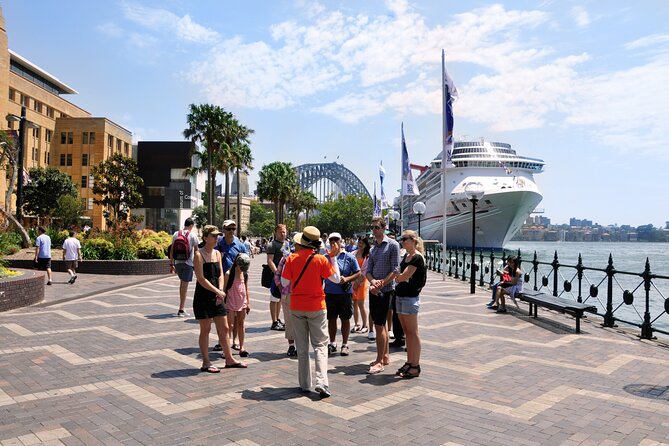
The tour starts at the Archibald Memorial Fountain in Hyde Park North (110 Elizabeth St). It’s a smart meeting point because you’re right in the city, and Hyde Park helps you understand where everything sits before you move into older Sydney.
From there, you’ll head out past a string of landmark buildings with short stops and explanations. Each stop is brief, so the rhythm is more like a guided walk with context than a sit-down history lesson. That works well if you want to orient yourself for the rest of your trip.
If you’re the type who likes walking tours but hates feeling rushed, this one tends to fit. One review called it mostly downhill, which is helpful if you’re managing energy or just want the legs to cooperate.
More laneways and convict corners in The Rocks
- Sydney The Rocks Guided Walking Tour
★ 5.0 · 1,546 reviews - Sydney: The Rocks 90-Minute History Walking Tour
★ 4.7 · 1,092 reviews - The Rocks Ghost Tours with Guide in Sydney
★ 4.5 · 482 reviews - Convicts and The Rocks: Sydney’s Walking Tour Led by Historian
★ 5.0 · 304 reviews
Hyde Park, then St Mary’s: the city’s “center” moments
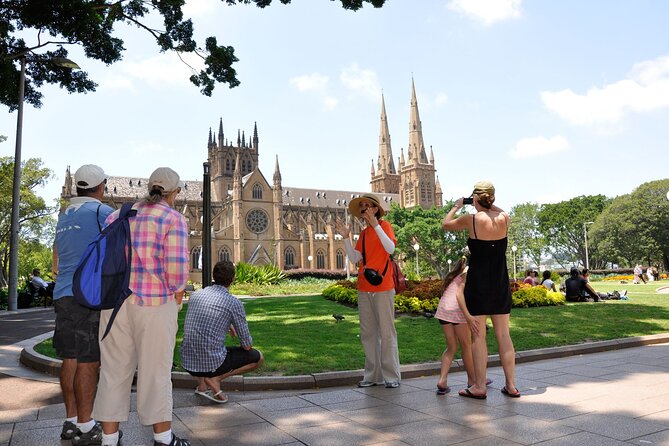
Your first stretch includes Hyde Park, where you get that sudden switch from traffic and towers to green space. Hyde Park is described as Australia’s oldest park, and the tour spotlights key monuments and the Anzac Memorial area. Even if you already know the basics, seeing it early helps you frame Sydney’s layout: city authority to one side, water and commerce to the other.
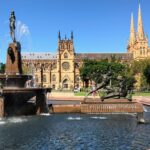
Next comes St Mary’s Cathedral, a major Gothic-style landmark tied to Sydney’s Catholic heritage. The point of the stop isn’t to “marvel and move on.” It’s to understand why this area grew the way it did, and how major institutions formed around it.
These first stops set the tone: you’re learning how different communities and power structures showed up in the same city blocks over time.
Hyde Park Barracks: convict-era Sydney in a UNESCO setting
Hyde Park Barracks is one of the most important stops on the walk. It’s listed as a UNESCO World Heritage site and is presented here as convict prison first, then later used as an immigration depot.
This is the kind of place where it helps to hear the timeline out loud. Instead of treating convict history like a single grim chapter, the tour connects why the buildings mattered, who they held, and what happened to the site as Sydney changed. You’ll likely leave with a clearer sense of how forced labor, migration, and labor systems shaped early urban life.
Practical note: the stop is short, so don’t expect a full museum-style visit. The value is in setting up what you might want to explore on your own afterward—especially if you like reading signs slowly and looking at details.
Queen’s Square, Rum Hospital, and Macquarie Street power stories
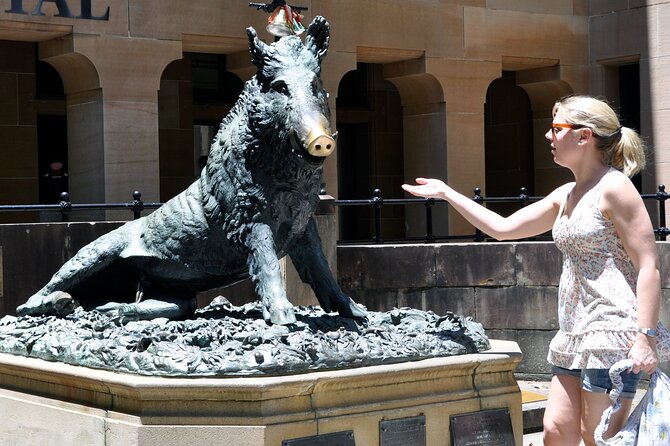
From Hyde Park you move toward the legal and civic precinct around Queen’s Square. This is where Sydney’s “official” buildings show up close together, including the Supreme Court and Law Courts area. It’s a good stop for understanding how law and governance became physical landmarks, not abstract ideas.
Then you reach the Rum Hospital / Sydney Eye Hospital area. This one gets people’s attention because the story is unusual: Australia’s first public hospital was built through a deal involving rum. The tour frames it as part of the early-settlement world—practical, rough-edged, and full of compromises.
After that, the walk follows along Macquarie Street, which the tour presents as Sydney’s power-and-architecture spine. Expect commentary that connects political leadership with the buildings you can actually see today, and why that matters when you’re trying to understand the city’s growth.
Botanic Garden to the Government Stables: nature and colonial-era buildings
The Royal Botanic Garden stop gives you a breather and a different kind of learning. The tour highlights the garden’s connection to Aboriginal culture, which helps balance the story beyond just European institutions and milestones.
Then you head toward the Sydney Conservatorium of Music, located in the Old Government Stables. This is one of those “same building, new purpose” stories that can feel more real than history books. You’ll get the idea that Sydney repeatedly reuses space—horses and carriages giving way to music and performances—while keeping the structure and location as a memory anchor.
Sydney at footpace, a few more routes

The Edge of the Trees and early public space: where cultures meet
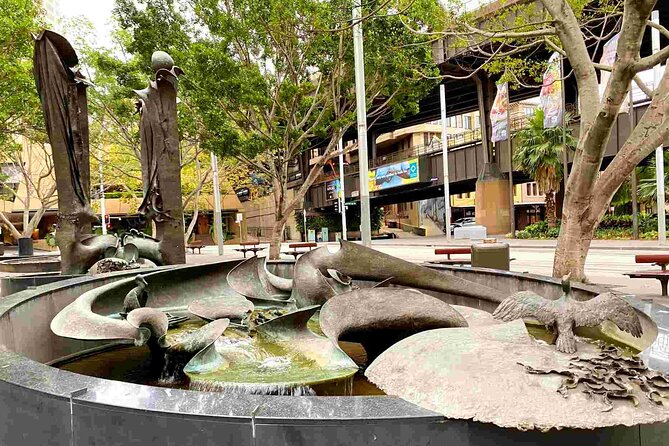
One of the more thought-provoking moments is at The Edge Of The Trees, described as artwork that reflects the intersection between Aboriginal and European cultures. It’s short, but it changes how you look at the rest of the route because you start noticing that Sydney’s history isn’t only about buildings. It’s also about relationships, survival, and meaning.
Next up is Macquarie Place Park, noted as an early public space. The stop emphasizes how small spaces can carry artifacts and reminders of the city’s first public-room-by-room development. You’re not just walking past green corners—you’re learning what “public” meant early on.
Customs House to The Rocks: from trade power to street-level life
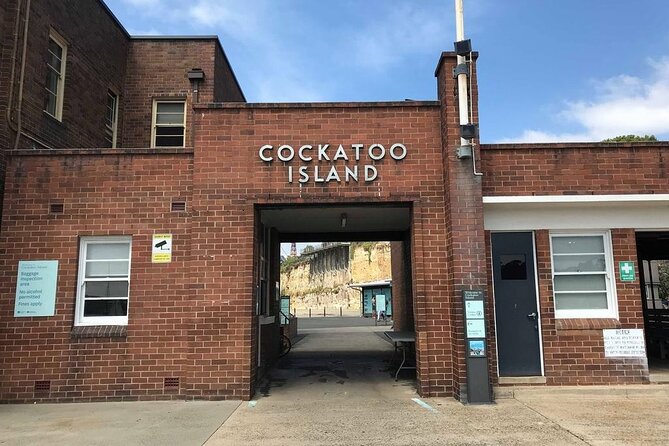
Customs House is where the walk pivots toward commerce. It’s framed as the heart of Sydney’s trade, overseeing the arrival of ships and goods. Even if you’ve only visited Circular Quay a few times, seeing Customs House in this historical context helps you connect what you see now with what used to arrive here.
Then the tour finally settles into The Rocks—Sydney’s historic precinct, described as a living museum. This is where cobblestone lanes and sandstone buildings give you that old-city feeling that modern districts rarely replicate. The guide’s role becomes especially important here: you’ll get pointed commentary that helps you read street patterns, building shapes, and the “why” behind the lanes.
If you only do one history-flavored area walk in Sydney, this is the one. The Rocks works because you’re seeing street life forms: alleys, steps, corners, and small streets that once served practical needs like movement, work, and housing.
Suez Canal, Nurses Walk, and Playfair Street: the underworld and everyday routes
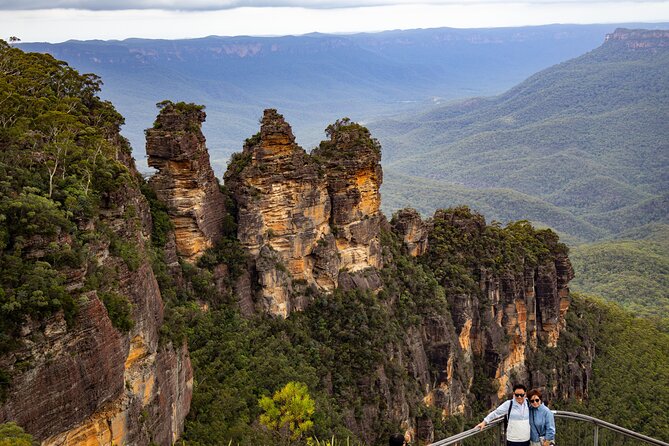
Inside The Rocks, you’ll hit several short laneway stops that each show a different slice of the neighborhood.
Suez Canal is presented as an infamous narrow laneway tied to criminals and shady characters. It’s a fun stop because it turns “a small alley” into a story location. Even when you’re just looking at brick and stone, the explanation makes you imagine the past activity.
Nurses Walk is a contrast in tone. The tour frames it as a route tied to early nurses and the challenges faced by pioneering women. That matters because it broadens the story beyond convicts and merchants into everyday work and care roles.
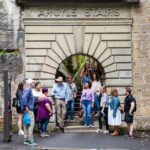
Playfair Street and Argyle Street keep the momentum. They’re treated as lanes that show how the area functioned when commerce and everyday business filled these streets—then how it exists now as an active heritage precinct. George Street continues this idea, mixing past and present in one long stretch of city life.
A good thing here: because the stops are short and the group is small, you can hear the story without feeling like you’re sprinting.
Campbells Cove finish: harbour views that feel like a reward
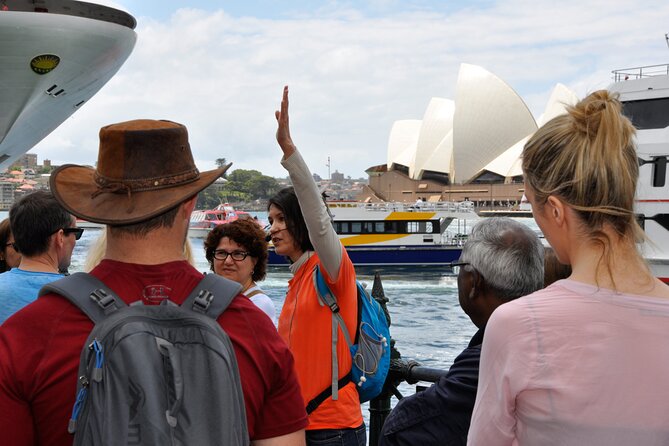
The walk ends at Campbells Cove (4 Circular Quay W). This is a strong choice for a finishing point because it’s practical and scenic at the same time—easy to connect to Circular Quay and nearby transport, plus you can find food and a post-walk cooldown.
The route includes a harbour payoff: views of the Opera House and Harbour Bridge. One review called it a surprise view at the end, which tracks with how The Rocks streets can feel “inland” until you step into the waterfront light.
If you still have energy, linger. Sit for a bit, then decide what you want to revisit next—either in The Rocks or back around Circular Quay.
Price and value: what $32.28 gets you in real-world terms
At $32.28 per person for about 2 hours 30 minutes, the value comes from two things: you get a guided route across a lot of major historical anchors, and most of the stop points are set up as free-to-view sights (the tour lists admission tickets as free for each stop).
You’re paying for interpretation and route planning, not museum entry. That’s a smart model if you want context fast and you don’t want to spend your day buying tickets for every building.
The other value factor is group size. With a maximum of 16, you’re more likely to hear the guide clearly and to ask questions about what you’re seeing right then, rather than just listening to a script from far away.
Guide style and walking pace: why people keep praising it
Across the feedback you can spot a common theme: the guides manage pace, explain stories clearly, and pay attention to comfort.
On hot days, one review specifically noted the guide stayed in shade when available. That’s not a detail you should ignore. In Sydney, sun can turn a simple walk into a sweaty slog, and shade breaks make a huge difference in how enjoyable the morning feels.
Many reviews also highlight how guides keep things engaging and answer questions accurately. Names that come up include Lily, Leilani, Laina, and Lele, suggesting the experience can feel personalized even within a standard tour.
Who this tour fits best (and who should skip it)
This is a great fit if:
- you want an intro to Sydney’s center plus The Rocks without planning dozens of separate visits
- you like history that’s tied to street-level scenes, not just plaques
- you prefer small groups and a guide who can answer questions
- you’ll be walking anyway, since the route is a real morning workout
You might want to reconsider if:
- you have trouble with uneven pavement or longer walking sessions
- you need frequent long breaks, since stops are typically short
- you hate tour pacing and prefer slow, self-led wandering the entire time
Should you book this Sydney and The Rocks walking tour?
I’d book it if you’re in Sydney for a short time or if you want your bearings quickly. This tour links Hyde Park, convict-era landmarks like Hyde Park Barracks, and the street story of The Rocks, then ends at a view-rich harbour spot.
It’s also a good first-day activity. You come out knowing where things are and what’s worth returning to, including free places nearby. Just show up with comfortable shoes, sun protection (hat and sunscreen), and a mindset that the history will be explained in short, memorable chunks.
If you’re the type who can’t handle walking for 2.5 hours, then wait or look for a shorter option. But if you can manage a guided walk, this one is strong value for the amount of ground it covers and the way it connects the past to what you see today.
FAQ
How long is the Sydney Walking Tour including The Rocks?
The tour lasts about 2 hours 30 minutes.
Where does the tour start and where does it end?
You meet at the Archibald Memorial Fountain in Hyde Park North (110 Elizabeth St). The tour ends at Campbells Cove (4 Circular Quay W, The Rocks).
What time does the tour begin?
The start time is 10:30 am.
How big is the group?
The tour is limited to a maximum of 16 travelers.
Do I need tickets for the stops?
The tour lists admission tickets as free for the stops along the route.
Is this tour suitable if I have moderate physical fitness?
The tour recommends a moderate physical fitness level.
Are service animals allowed?
Yes, service animals are allowed.
Is there mobile ticketing?
Yes, the tour includes a mobile ticket.
What is the cancellation policy?
You can cancel for free up to 24 hours in advance for a full refund. If you cancel less than 24 hours before the start time, the amount paid is not refunded.
More Tour Reviews in Sydney
- Blue Mountains Small-Group Tour from Sydney with Scenic World,Sydney Zoo & Ferry
★ 5.0 · 3,709 reviews




Sydney on Foot: More Walks



Convict Corners of The Rocks


Fresh off the jetty: more Sydney reviews


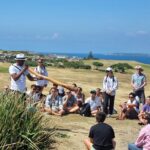

The Rocks History Walks, compared.
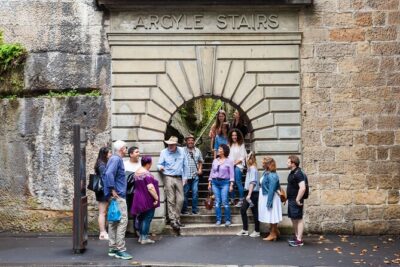 ★ 5.0Sydney The Rocks Guided Walking TourFrom $321,546 reviews
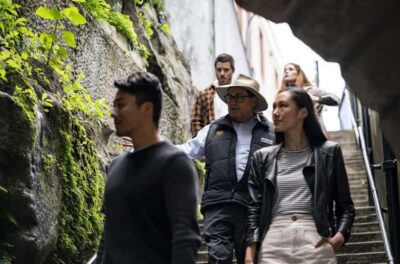 ★ 4.7The Rocks 90-Minute History Walking TourFrom $321,092 reviews
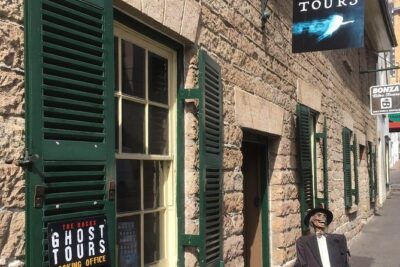 ★ 4.5The Rocks Ghost Tours with Guide in SydneyFrom $39482 reviews
 ★ 5.0The Rocks Pub Walking TourFrom $82447 reviews
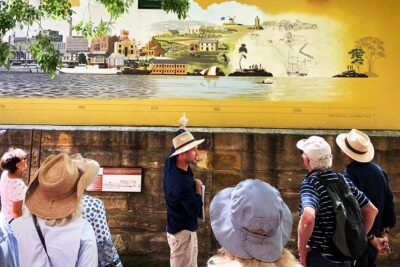 ★ 5.0Convicts and The Rocks: Sydney’s Walking Tour Led by HistorianFrom $37304 reviews
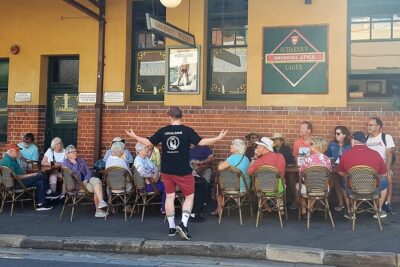 ★ 5.0Sydney The Rocks Historical Pub TourFrom $82251 reviews
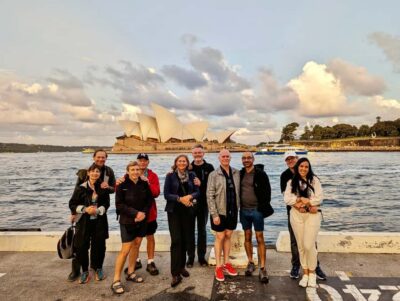 ★ 4.9City & The Rocks 3.5-Hour Walking Tour with a DrinkFrom $53234 reviews
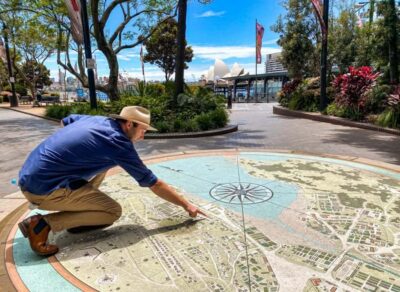 ★ 4.9Sydney Convicts, History & The Rocks 2.5-Hour Walking TourFrom $36181 reviews
Browse the lists this tour appears in