
Reviewed · THE ROCKS HISTORY WALKS
Sydney Convicts, History & The Rocks 2.5-Hour Walking Tour
Rum, chains, and sandstone—right under Sydney’s feet. This Sydney Convicts, History & The Rocks walking tour turns the harbor’s “pretty” backdrop into a story of punishment, ambition, and survival, all while you move past real heritage buildings.
I love two things most: the chance to step inside historic spaces like Customs House and Argyle Stores, and the way the guide keeps the facts straight while still making the past feel human. The best guides (I’ve seen names like Bec, Max, Alex, and Pete) use photos and clear explanations to help you picture what life was like.
One heads-up: The Rocks is a walk with some unavoidable stairs, and it isn’t set up for people with mobility impairments. Also, the themes are adult, so it’s best for ages 14-plus.
In This Review
- Key highlights you’ll remember after The Rocks
- Why The Rocks still feels like Sydney’s origin story
- Customs House Library: starting where the colony organized itself
- Circular Quay: seeing the harbor as a working place
- Macquarie Place Park: power, ambition, and how buildings got made
- The Rocks, 75 minutes: rum dealers, street gangs, and sandstone you can feel
- What to watch for while you’re walking
- Argyle Cut finish: a strong last visual
- Guides make the difference: clear answers, good pacing, real stories
- Architecture you’ll actually understand after this walk
- Practical tips that keep this walk easy on you
- Price and value: why $36 feels fair for this experience
- Should you book the Sydney Convicts and The Rocks walking tour?
- FAQ
- Where do I meet the guide?
- How long is the tour?
- What’s included in the ticket price?
- Is this tour suitable for children?
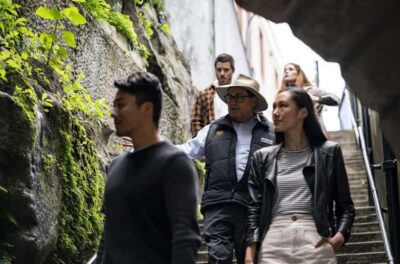
- Are there stairs?
- Is the tour suitable for people with mobility impairments?
- Are pets, luggage, or strollers allowed?
- Does the tour run in bad weather?
- Can I cancel or pay later?
Key highlights you’ll remember after The Rocks
Customs House + Argyle Stores entry so you’re not only looking from the street.
Convict-cut sandstone and hidden spaces that connect architecture to real stories.
Rum-dealer and street-gang history that explains how money and power worked early on.
A story of transportation and its effects on Indigenous people around the turn of the 19th century.
A guide-led walk with good pacing—the group stays together and questions are encouraged.
Finishing at Argyle Cut gives you a strong last visual to tie it all together.
Why The Rocks still feels like Sydney’s origin story
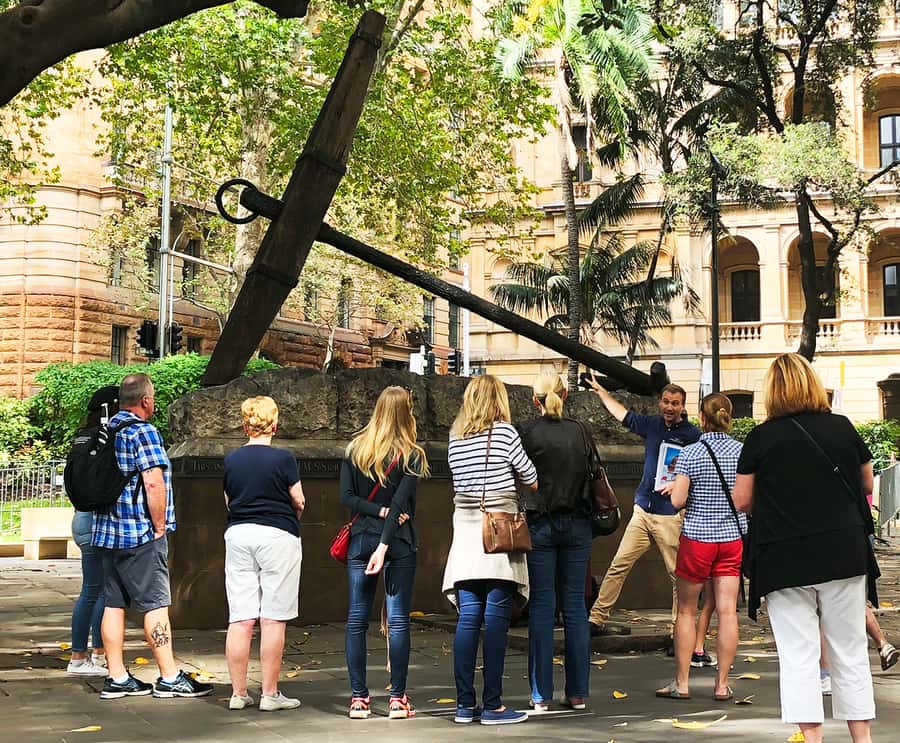
Sydney’s modern skyline is impressive, but The Rocks is where the colony’s messier beginnings still show. This tour focuses on the moment when convicts, soldiers, and sailors first shaped daily life around the harbor—then how that chaos evolved into systems, buildings, and money.
You’re walking through a part of town where stone and layout matter. When your guide points out convict-cut sandstone, hidden corridors, and cellars used for spirits and stores, you start reading the streets like a document, not a postcard.
The vibe is also practical: you’re not just hearing names and dates. You’re learning why the colony worked the way it did—through labor, punishment, trade, and the constant pressure of survival.
More laneways and convict corners in The Rocks
- Sydney The Rocks Guided Walking Tour
★ 5.0 · 1,546 reviews - Sydney: The Rocks 90-Minute History Walking Tour
★ 4.7 · 1,092 reviews - The Rocks Ghost Tours with Guide in Sydney
★ 4.5 · 482 reviews - Convicts and The Rocks: Sydney’s Walking Tour Led by Historian
★ 5.0 · 304 reviews
Customs House Library: starting where the colony organized itself
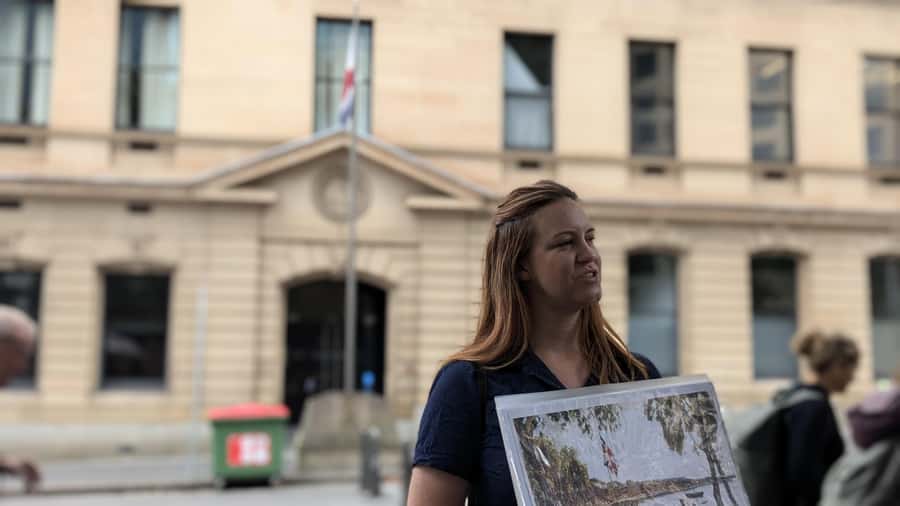
Your tour starts at Customs House Library, outside the Customs House building on the right-hand side if you’re facing it. That matters, because Customs House sits at the edge of commerce and control—two themes you’ll hear again and again.
From here, the walk immediately connects to maritime Sydney. You get a guided look at Customs House itself, about 15 minutes, with context for how trade and regulation shaped the harbor community.
Even if you’ve walked past this area a hundred times, the guide’s angle makes it feel new. You’ll start noticing how the colony’s power came with infrastructure: buildings, rules, and access to goods.
Circular Quay: seeing the harbor as a working place
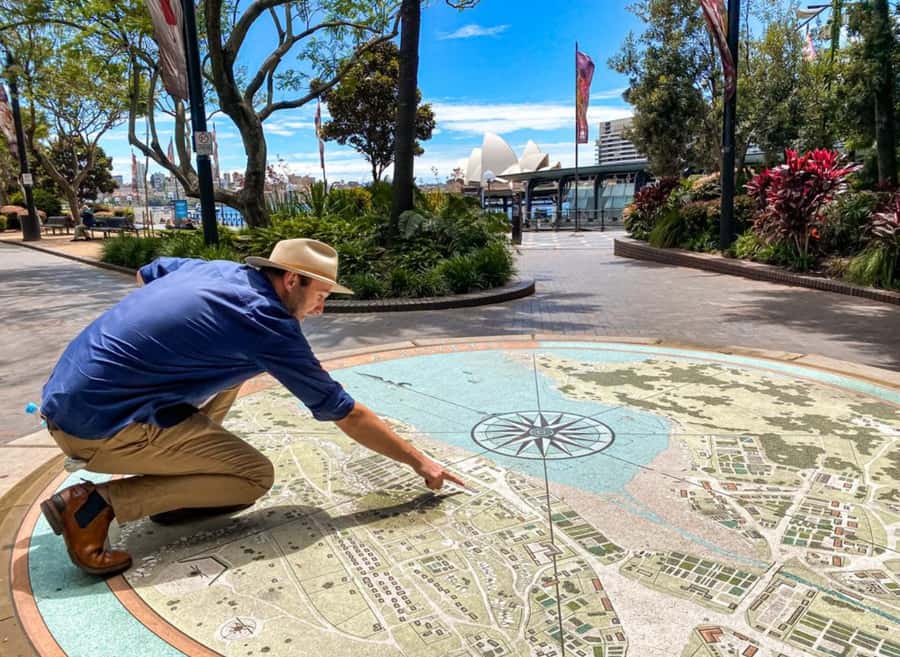
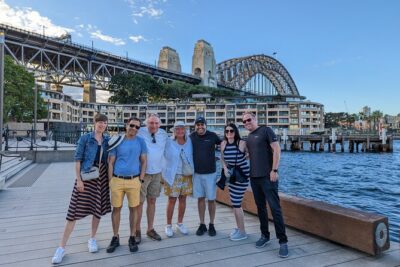
Circular Quay is where people usually slow down to take photos. On this tour, you slow down to understand what that “view” used to represent: an arrival point, a supply route, and a place where people’s lives intersected fast.
You spend about 25 minutes here, and the guide uses the setting to talk about the movement of convicts, soldiers, and sailors. It’s not just background—it’s the engine for why stories from The Rocks matter.
You’ll also get a clearer sense of how quickly Sydney’s early population shifted. The harbor drew people in, then the colony’s needs pulled them into jobs, markets, and power struggles.
Macquarie Place Park: power, ambition, and how buildings got made
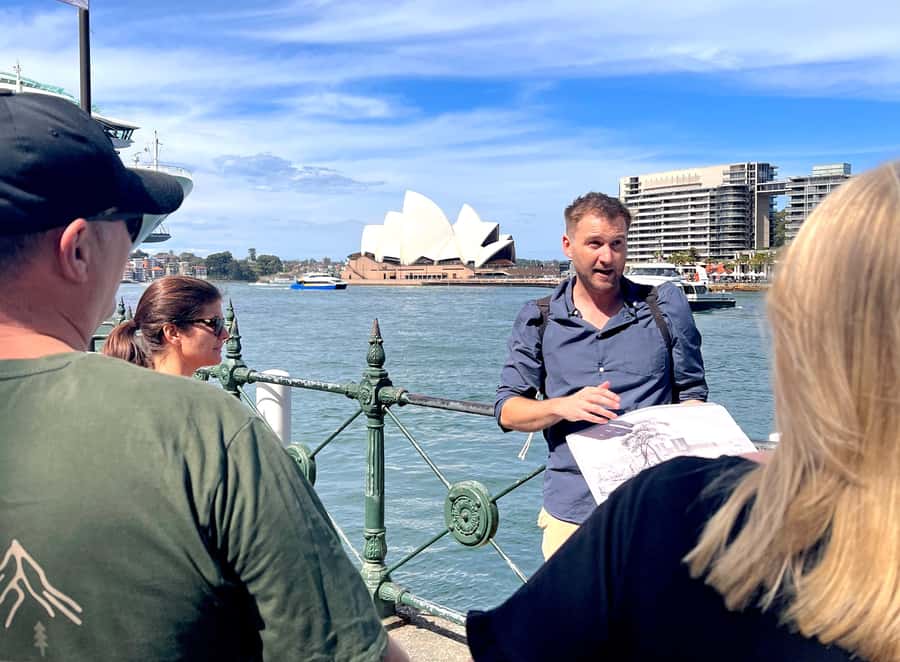
Macquarie Place Park is a short stop—about 20 minutes—but it’s an important one. This is where you start hearing the “why” behind decisions made by leaders and administrators, not only the “what” of convict life.
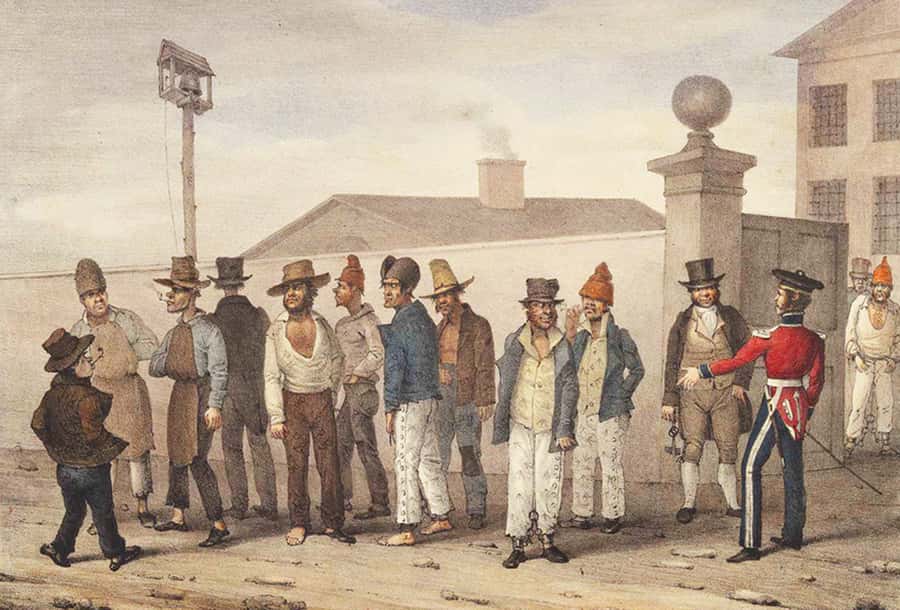
You’ll hear about the process of criminal transportation to Australia and how it shaped early Sydney. You’ll also learn about the immediate effect on Indigenous people around the turn of the 19th century, which gives the tour a harder edge than the usual heritage walk.
One of the most memorable story threads here is the idea of ambition meeting punishment: the convict architect and the governor who wanted to decorate the prison settlement. That contrast helps explain how architecture could carry both order and symbolism.
The Rocks, 75 minutes: rum dealers, street gangs, and sandstone you can feel
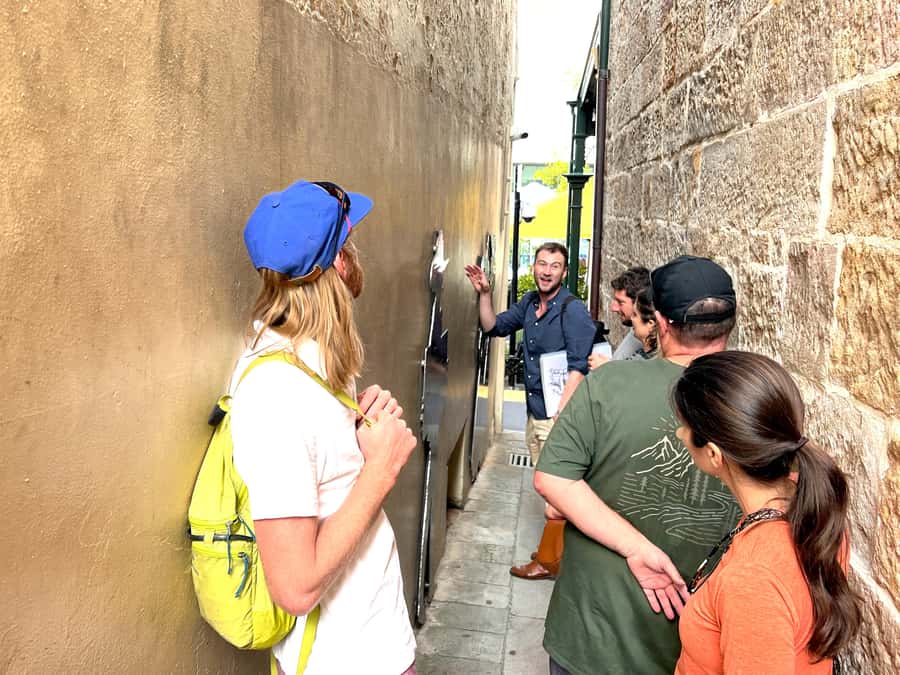
The Rocks is the heart of the tour, with about 75 minutes spent exploring it on foot. This is where the cobblestone lanes and small turns start doing their job: they force you to slow down, look closely, and pay attention to details you’d normally miss.
The guide focuses on several linked themes:
First is the economy of the place. You’ll hear about notorious rum dealers and street gangs, and how alcohol and informal networks helped shape wealth. It’s also the layer that makes the stories easy to follow: when money changes hands, you can track motive and conflict.
Second is the physical evidence. Expect convict cut sandstone, hidden corridors, and abandoned-feeling corners that hint at earlier living conditions. You’ll also hear about enormous cellars used for spirits and stores, which gives a real-world sense of how goods were stored and controlled.
Third is the human arc. The tour includes the story of a teenage girl who rose from chains to riches by conquering Sydney’s economy. That kind of turnaround can sound like legend—until the guide places it in the colony’s trade reality.
And because the area includes people and images now deceased, Aboriginal and Torres Strait Islander visitors are advised it may include those references. You should go in knowing the tone isn’t sanitized.
Sydney at footpace, a few more routes
What to watch for while you’re walking
Look for the stonework and transitions in building materials. When your guide points out convict-cut sandstone, it’s not just trivia—it helps you connect the colony’s labor to what you’re physically standing on.
Also keep an eye out for older building shapes that look slightly awkward by modern standards. That “off” feel often comes from the way structures were built, reused, expanded, or left incomplete.
Argyle Cut finish: a strong last visual
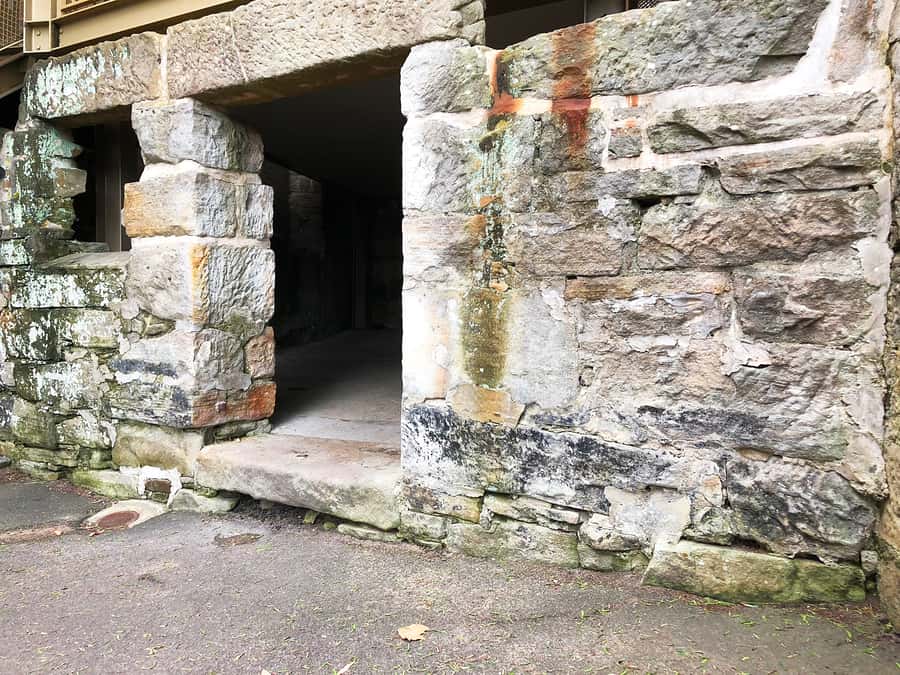
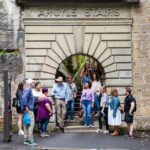
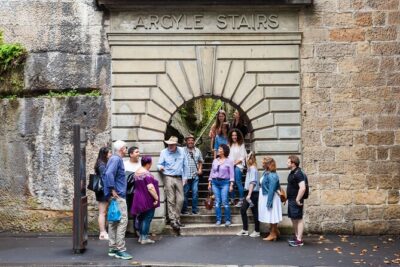
The tour ends at Argyle Cut. This finish point works well because it gives you a final anchor in a part of The Rocks that feels shaped by the pressure of early building.
You’ll leave with a more connected picture of how transportation and punishment translated into work, structures, and systems. The colony didn’t just grow randomly; it grew by turning people and resources into labor and markets.
If you still have energy, I suggest taking a slow look around after the walk. You’re already in “story mode,” and the area will make more sense once you’ve got the thread in your head.
Guides make the difference: clear answers, good pacing, real stories
What consistently shows up in how this tour is delivered is a focus on communication and group comfort. Guides like Bec, Max, and Pete are praised for keeping questions flowing and for explaining clearly without rushing.
One detail I really like: the guides don’t feel like they’re performing. They keep the tone friendly, keep the group together, and (in standout cases) admit when they don’t know something instead of guessing.
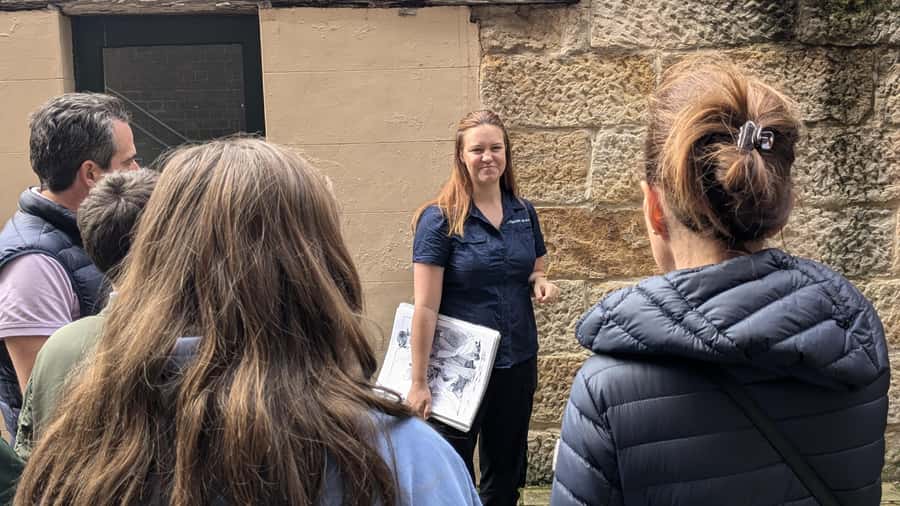
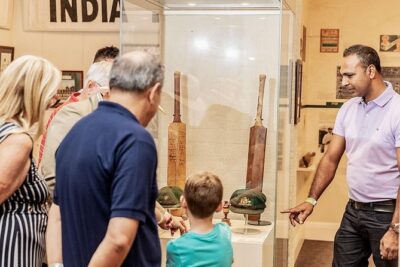
You may also get visuals. I’ve seen guides bring printed images (like an A3 photo folder) that help you match the story to what you’re seeing on the street. If you’re the type who learns by sight, this matters a lot.
Pacing is another win. Multiple guides are described as right on time and not dragging. Even when weather turns ugly, the tour keeps moving, so your 2.5 hours don’t disappear into delays.
Architecture you’ll actually understand after this walk
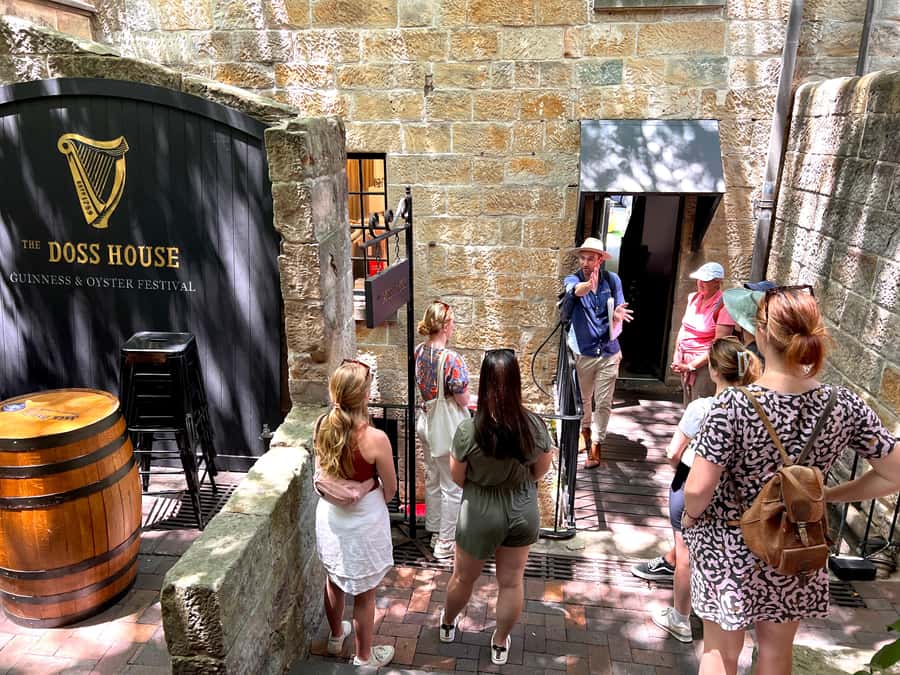
This isn’t a “look at the old building” tour. It’s a “why does this matter” tour, and that’s how it teaches Georgian and Victorian architecture in a practical way.
You’ll hear about Georgian and Victorian architecture examples as you walk, and the guide connects them to how the settlement grew. When architecture is explained through labor, trade, and punishment, it stops being just style and becomes evidence.
You’ll also hear about unknown stories behind heritage buildings. That’s where hidden corridors and the layout of cellars for spirits and stores come in. It’s a quick lesson in how cities use space to control people, goods, and movement.
If you’re the kind of traveler who usually skips the plaques, you’ll probably enjoy this more than you expect, because your guide gives you the story the plaque can’t fit.
Practical tips that keep this walk easy on you
This tour is 150 minutes, so plan it like a single block, not something to stack with heavy plans right after. Wear comfortable walking shoes, and bring water—The Rocks can add a surprising amount of walking effort even when you think it’s just a short stroll.
Some stairs are unavoidable at points in The Rocks. If you’re sensitive to steps or have balance concerns, keep that in mind ahead of time. The tour is also not suitable for people with mobility impairments.
Luggage or large bags aren’t allowed. Pets aren’t allowed either, though assistance dogs are. Baby strollers also aren’t allowed, so if you’re traveling with kids, plan for a baby carrier situation that still respects the walking constraints.
Weather doesn’t stop the tour. It continues in wet or wild conditions, so bring an umbrella or raincoat and stay ready.
Finally, the content includes adult themes and topics tied to crime and punishment, so it’s most suitable for people older than 14.
Price and value: why $36 feels fair for this experience
At $36 per person for 2.5 hours, you’re paying for more than a stroll. You’re buying a guided interpretation of a high-density area, plus entry into historic buildings such as Customs House and Argyle Stores.
That combination is the real value. A self-guided walk through The Rocks can be pleasant, but it won’t automatically connect convict transportation, Indigenous impacts, rum trade networks, and architecture in one flowing narrative.
You also get an insider’s angle on local historic pubs, heritage architecture, and discovery museums. That’s the kind of practical knowledge that helps you plan what to do next, instead of just finishing the walk with facts you forget later.
If you want one paid experience in Sydney that turns the harbor district into a story you understand, this is priced in a way that makes sense.
Should you book the Sydney Convicts and The Rocks walking tour?
Book it if you want Sydney’s early days with structure: convicts, governance, trade, and the physical evidence still in the streets. It’s also a great fit if you learn best from a real guide who can answer questions and use visuals when needed.
Skip it if stairs and limited mobility are a deal-breaker for you, since the tour layout includes unavoidable steps and it’s not suitable for mobility impairments. Also, if you prefer only family-friendly topics, the adult themes may not match your style.
If you like your history grounded in real locations—sandstone, corridors, cellars, and old harbor edges—this tour gives you that payoff. You finish with The Rocks feeling less like scenery and more like a living document of Sydney’s beginnings.
FAQ
Where do I meet the guide?
Meet your guide in front of the Customs House building, outside, on the right-hand side if you are facing the building.
How long is the tour?
The tour runs for 150 minutes (about 2.5 hours). Starting times vary, so check availability for the day you want.
What’s included in the ticket price?
It includes 2.5 hours with a local historian, entrance into historic buildings such as Argyle Stores and Customs House, and an insider’s guide to historic pubs, heritage architecture, and discovery museums.
Is this tour suitable for children?
It’s most suitable for persons older than 14 years of age due to adult themes and concepts.
Are there stairs?
Yes. Due to the layout of The Rocks, some stairs are unavoidable at certain points.
Is the tour suitable for people with mobility impairments?
No. The tour is not suitable for people with mobility impairments.
Are pets, luggage, or strollers allowed?
Pets are not allowed (assistance dogs are allowed). Luggage or large bags are not allowed, and baby strollers are not allowed.
Does the tour run in bad weather?
Yes. In wet or wild weather, the tour will continue. Bring an umbrella or raincoat so you can handle the conditions comfortably.
Can I cancel or pay later?
There’s free cancellation up to 24 hours in advance for a full refund. You can also reserve now and pay later, with payment not required today.
More Tour Reviews in Sydney
- Blue Mountains Small-Group Tour from Sydney with Scenic World,Sydney Zoo & Ferry
★ 5.0 · 3,709 reviews




Sydney on Foot: More Walks



Convict Corners of The Rocks

Fresh off the jetty: more Sydney reviews




The Rocks History Walks, compared.
 ★ 5.0Sydney The Rocks Guided Walking TourFrom $321,546 reviews
 ★ 4.7The Rocks 90-Minute History Walking TourFrom $321,092 reviews
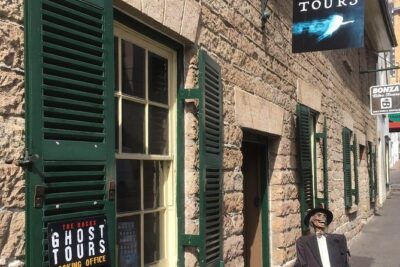 ★ 4.5The Rocks Ghost Tours with Guide in SydneyFrom $39482 reviews
 ★ 5.0The Rocks Pub Walking TourFrom $82447 reviews
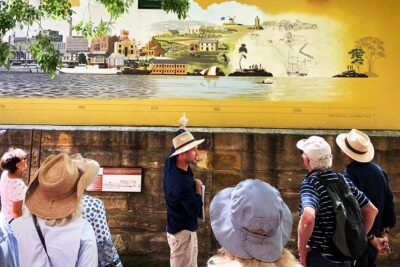 ★ 5.0Convicts and The Rocks: Sydney’s Walking Tour Led by HistorianFrom $37304 reviews
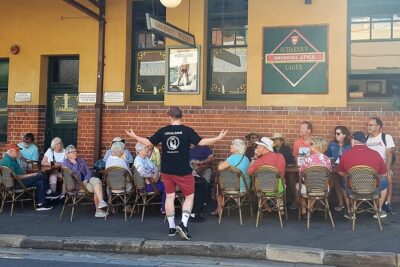 ★ 5.0Sydney The Rocks Historical Pub TourFrom $82251 reviews
 ★ 4.9City & The Rocks 3.5-Hour Walking Tour with a DrinkFrom $53234 reviews
 ★ 5.0Sydney Walking Tour including The Rocks (small group)From $32147 reviews
Browse the lists this tour appears in