
Reviewed · THE ROCKS HISTORY WALKS
Sydney Origin Story Walk in The Rocks
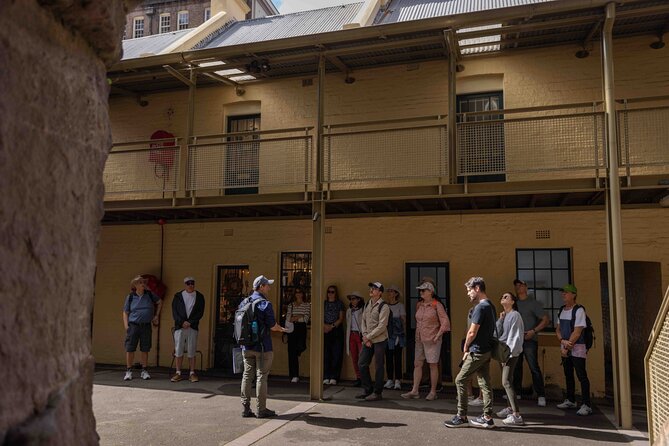
Sydney got darker in 2.5 hours. The Sydney Origin Story Walk in The Rocks turns gritty beginnings into street-level theatre, with dark humour and sharp local context instead of dry facts. You’ll follow a guide named Ed, who brings stories to life the way a former TV director knows how, while keeping everything grounded in the places you’re standing.
What I like most is the balance: you get proper locations (Cadman’s Cottage, convict tunnels, and alleyways) plus commentary that makes them make sense. I also love the food and drink stop—native flavours like wattleseed ANZAC cookies and lemon myrtle tea add a nice break from all the heavy scenes.
One possible downside: it’s a walking tour and it runs only in good weather, so you’ll want comfortable shoes and a flexible mindset if skies look iffy.
In This Review
- Key highlights you’ll care about
- Why The Rocks feels different when you walk it
- Price and timing: $48.77 for about 2.5 hours
- Meeting at 107 George St and what the walk feels like
- Stop 1: Cadman’s Cottage and the convict baseline
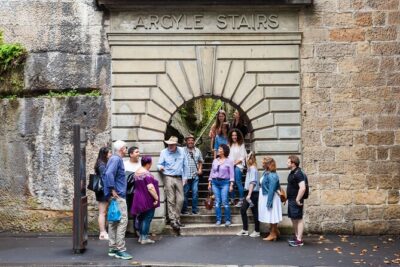
- Stop 2: The Argyle and the convict-hewn tunnel
- Stop 3: Foundation Park and the sandstone ruin clues
- Stop 4: Campbells Cove for colonial shipping and harbour views
- Stop 5: Playfair Street’s preserved colonial streetscape
- Stop 6: Dawes Point Park under the Harbour Bridge
- Stop 7: Suez Canal and the alleyway legends
- Wattleseed ANZAC cookies and lemon myrtle tea: why the tasting matters
- Group size, pacing, and the end-of-walk pub finale
- Who should book this tour
- Should you book the Sydney Origin Story Walk in The Rocks?
- FAQ
- Where does the tour start?
- What time does the tour begin?
- How long is the walking tour?
- What does it cost?
- Is there a mobile ticket?
- How many people are in the group?
- Will I get confirmation after booking?
- Is the tour near public transportation?
- What happens if the weather is poor?
- Is service provided for guests with service animals?
Key highlights you’ll care about
- Convict-built spaces you can actually see, including a tunnel carved into the sandstone
- Small group size (max 10 people), which makes the storytelling feel personal
- Native tastings like wattleseed ANZAC cookies and lemon myrtle tea
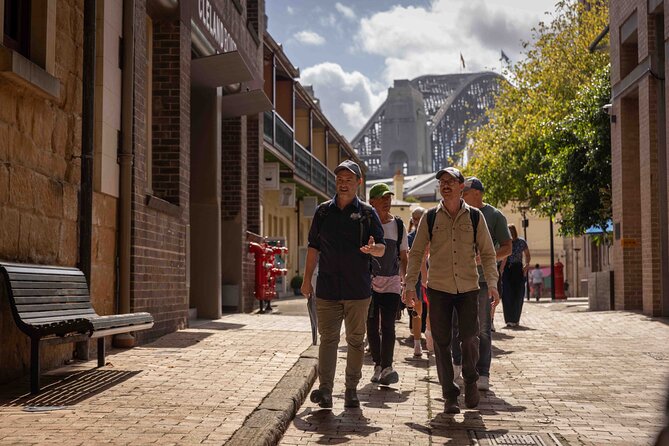
- Harbour Bridge views at Dawes Point Park, where military and Gadigal history sit close together
- Dark, funny street stories about sly grog, brothels, corruption, and survival
- A relaxed ending with a pub finale, so you can finish the walk and keep chatting
Why The Rocks feels different when you walk it
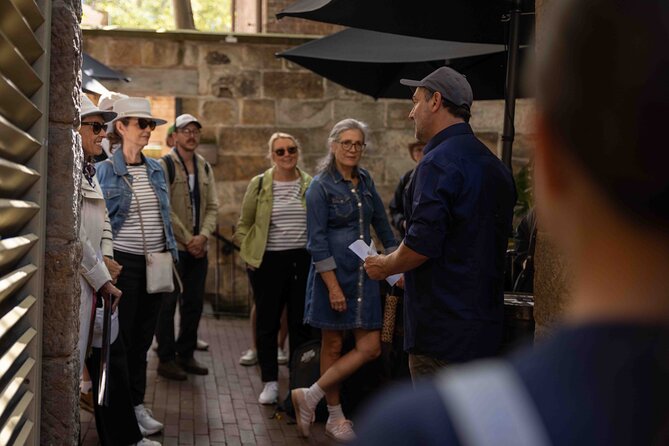
The Rocks is the kind of place that looks scenic at first glance, but the streets have layers. This tour works because it doesn’t treat history like museum glass. You hear about convicts, crime, and survival while you’re next to the exact walls and laneways where it happened.
I like the tone. It’s not grim for the sake of grim. The humour is there, but it’s used to make the stories stick and to show the absurdity of power struggles and survival schemes. The result is that the area stops being just photos and becomes a living map of how Sydney got built.
And because you’re outdoors the whole time, context lands fast. One minute you’re looking at a cottage. The next minute you understand how it fit into a larger convict system, and why that changes how you read the whole neighbourhood.
More laneways and convict corners in The Rocks
- Sydney The Rocks Guided Walking Tour
★ 5.0 · 1,546 reviews - Sydney: The Rocks 90-Minute History Walking Tour
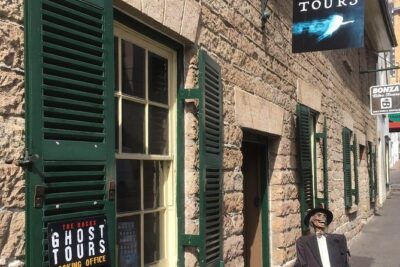
★ 4.7 · 1,092 reviews - The Rocks Ghost Tours with Guide in Sydney
★ 4.5 · 482 reviews - Convicts and The Rocks: Sydney’s Walking Tour Led by Historian
★ 5.0 · 304 reviews
Price and timing: $48.77 for about 2.5 hours
At $48.77 per person for an approximately 2 hours 30 minutes walk, you’re paying for two things: professional guiding and “place-based” storytelling. You’re not just buying access to sights; you’re buying time with someone who knows how to connect those sights into a clear narrative.
The tour keeps the pacing sensible, with short stops (roughly 10 minutes at most locations, a bit longer at the Dawes Point lookout). That matters because The Rocks is easy to wander around on your own and miss half the details. Here, you’re handed a sequence, so your brain keeps track instead of bouncing from one postcard angle to the next.
It also helps that the group is limited to 10 people. Smaller groups mean fewer long silences and more chance for questions when the guide points out what to look for.
Meeting at 107 George St and what the walk feels like
You start at 107 George St, The Rocks NSW 2000 at 9:30 am, and the walk ends back in The Rocks. Getting the start time early is smart: you’re more likely to beat tour crowds and still have enough daylight to enjoy harbour views without rushing.
The tour is described as accessible for most travelers, and service animals are allowed. It’s also near public transportation, so you don’t have to plan a full day around parking.
One thing to keep in mind: you’ll be on foot from start to finish. The stops are close enough to keep things flowing, but the experience depends on your comfort walking on uneven sidewalks and laneway steps—so bring shoes you’d actually wear for a city walk, not just something “nice.”
Stop 1: Cadman’s Cottage and the convict baseline
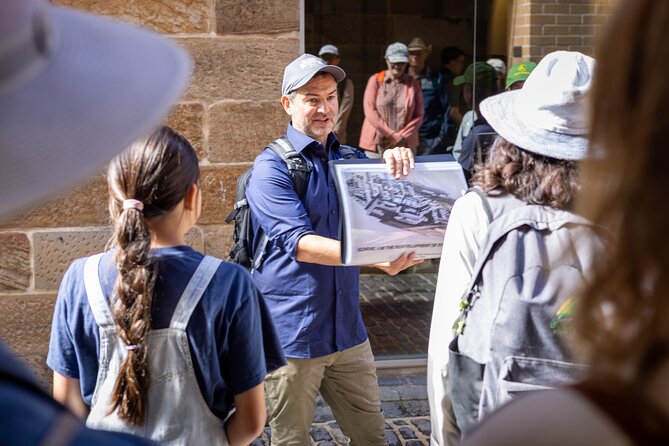
You begin at Cadman’s Cottage, billed as Sydney’s oldest surviving residential building and a convict base. That combo is the hook: this isn’t a decorative old house you can admire from a distance. It’s tied to the labour system and daily life of early colonists.
What makes this stop valuable is how it sets the tone for the rest of the tour. Before you move on to tunnels and alleyways, you get a baseline. You understand that The Rocks wasn’t just crime on the side. It was infrastructure—housing, work, and control—built right into the neighbourhood.
A practical tip: treat your first stop like orientation. Look at the building details, then listen for what the guide connects it to—because later stops will feel clearer when you already know what kind of world these structures belonged to.
Stop 2: The Argyle and the convict-hewn tunnel
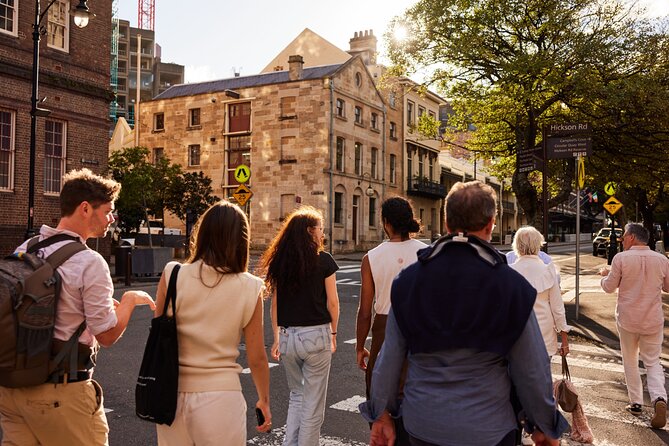
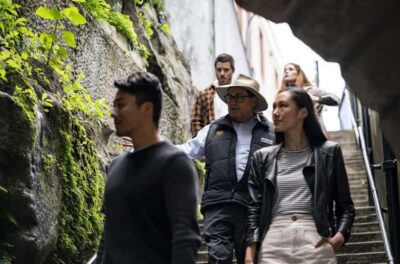
Next is The Argyle, where you’ll hear about a dramatic convict-hewn tunnel linking Millers Point and The Rocks. A tunnel like that isn’t just a curiosity. It’s proof of how early residents moved through the area—out of sight, out of weather, and for reasons tied to labour and logistics.
This stop stands out because it turns “hidden history” into something physical. You’re not only being told that people used secret routes; you’re shown the kind of corridor that makes sense for covert movement and practical transport.
If you like visuals, pay attention to the way the guide frames the tunnel within the larger street network. That’s when you start seeing The Rocks like a system, not a cluster of attractions.
A few more Sydney walks, at your own pace
Stop 3: Foundation Park and the sandstone ruin clues
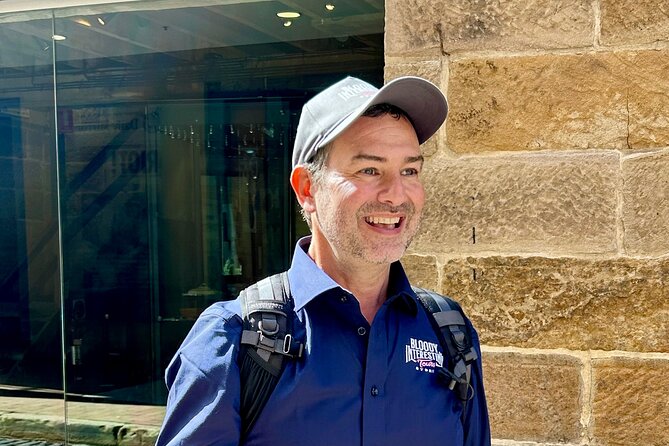
At Foundation Park, the focus shifts to ruins: sandstone remnants of a former slum. This stop helps the tour avoid the trap of only telling heroic or sensational stories. It brings you back to the reality that many early residents lived in harsh conditions, with buildings and communities that didn’t last.
What I like here is that it adds emotional weight without turning into melodrama. You can look at the remnants and understand why survival and overcrowding were constant pressures.
If you want to get the most from this stop, slow down for a minute and actually read the ground-level layout. Even without detailed signage, the shape of what’s left can clue you in to what the neighbourhood was like.
Stop 4: Campbells Cove for colonial shipping and harbour views
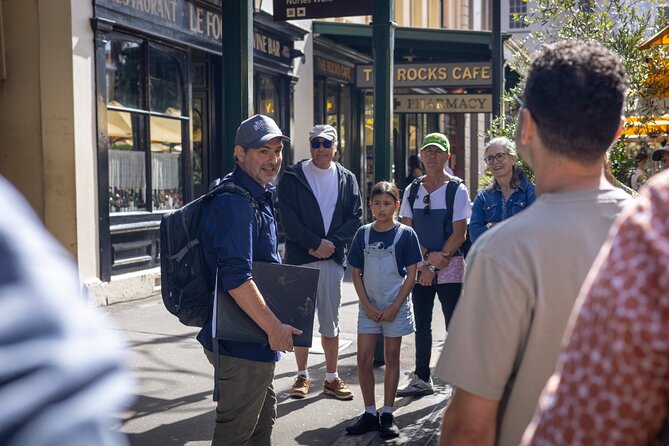
Now you get one of the most useful reality checks: Campbells Cove, with harbour views and colonial shipping context. When you’re inside narrow laneways, it’s easy to forget how movement and commerce shaped everything. The harbour makes that plain.
This is where the tour helps you connect the dots between where goods arrived and where people lived, worked, and hid. Shipping history isn’t just ships on a postcard—it explains why certain areas attracted certain kinds of activity.
Take a moment for the view, then listen for the guide’s links between the water and the street-level stories you’ve just heard. That contrast—open harbour versus cramped streets—is a big part of why The Rocks is such a compelling place to walk.
Stop 5: Playfair Street’s preserved colonial streetscape
On Playfair Street, you’ll see iconic thoroughfares lined with preserved colonial buildings. This isn’t just a photo stop. The guide uses the preserved streetscape to show how the area has been shaped over time—what survived, what was altered, and what the architecture can still tell you.
For me, this part is where the tour becomes practical. If you’ve ever wandered The Rocks on your own and felt like you were reading random scraps, this helps you build a timeline in your head.
Look closely at the building frontage and street rhythm. Even when you can’t identify every detail, you can still feel the difference between a planned street and the older, more improvised zones that supported everyday life and commerce.
Stop 6: Dawes Point Park under the Harbour Bridge
At Dawes Point Park, you’ll learn that it was once the site of the colony’s first gun battery. Today it’s a peaceful lookout beneath the Harbour Bridge, which makes the contrast especially striking: you’re taking in scenery that exists partly because the area once mattered for defence and control.
The guide also brings in Gadigal history alongside the military story. That combination is important, because it stops the narrative from becoming only convict-and-crime. The land and its meaning existed before the gun battery, and it continues after.
Practical note: since the lookout is open, this is a good stop to pause and rehydrate if needed—especially if the weather is warm. If it’s windy under the bridge, you’ll feel it, so plan a light layer if you get cold easily.
Stop 7: Suez Canal and the alleyway legends
The final major stop is Suez Canal, an alleyway once known for sly grog, brothels, and push gangs. This is where the tour leans hardest into the darker street stories—corruption, survival tactics, and the kind of informal power that emerges in places with weak oversight.
This stop works best if you let the guide slow you down. The alleyway scale changes how you think about crime and enforcement. When the streets are tight, everything is visible in a different way—yet also easy to hide in plain sight.
It’s also a useful reminder that “history” isn’t only official records and big dates. It’s also the everyday economies that formed around alcohol, services, and opportunism. Even if some stories are uncomfortable, hearing them in context helps you understand why they happened.
Wattleseed ANZAC cookies and lemon myrtle tea: why the tasting matters
Native flavours are built into this tour’s rhythm, not just sprinkled on top. You’ll taste wattleseed ANZAC cookies and lemon myrtle tea, which gives you a sensory reset after the heavier themes.
Why it matters: food is a bridge between time periods. It reminds you that the story of place isn’t frozen in the past. The Rocks is where multiple eras overlap, and tasting something native makes the setting feel less like a closed historical chapter.
Also, the tasting is timed well. It breaks up the walking, keeps energy up, and gives you something to talk about with your group—especially if you’re the kind of person who likes to compare which story stuck most.
Group size, pacing, and the end-of-walk pub finale
The tour’s flow is designed to keep moving without feeling rushed. Most stops are short, and the guide uses each one as a cue for the next chapter. That’s why it feels like a guided story rather than a lecture.
The small group limit helps again here. You’re not lost in a crowd, and you can actually hear the details when the guide points out the small stuff—tunnel origins, street connections, and why a particular location mattered.
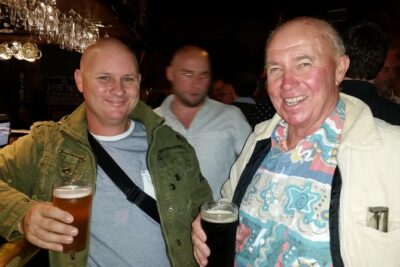
It also ends with a pub finale, which I like for one simple reason: you get closure without needing to plan your next stop instantly. You can grab a drink or just wind down, and the stories are still fresh enough that you’ll remember what you learned on the walk.
Who should book this tour
This is a strong choice if you:
- Want story-driven history in the streets, not facts recited at you
- Like a guide who can mix dark humour with real context
- Enjoy The Rocks but want to see beyond the obvious highlights
- Like small-group experiences (max 10 people) with time for questions
You might reconsider if you:
- Prefer strictly “academic” history without humour or darker themes
- Struggle with city walking on uneven surfaces
- Are travelling when weather is unreliable (the tour requires good weather)
Should you book the Sydney Origin Story Walk in The Rocks?
If you’re aiming to understand The Rocks in a single morning, I’d book it. This isn’t “look and read a sign” sightseeing. It’s a guided walk that turns specific places—like Cadman’s Cottage, a convict-hewn tunnel, and an alleyway tied to sly grog—into a coherent story you’ll carry with you.
The value is in the combination: a professional guide (Ed), a tight group size, a price that’s fair for guided time, and sensory extras like wattleseed cookies and lemon myrtle tea. If you want Sydney history that feels human, messy, and real, this delivers.
FAQ
Where does the tour start?
The tour starts at 107 George St, The Rocks NSW 2000, Australia.
What time does the tour begin?
The start time is 9:30 am.
How long is the walking tour?
It runs for about 2 hours 30 minutes.
What does it cost?
The price is $48.77 per person.
Is there a mobile ticket?
Yes, the tour uses a mobile ticket.
How many people are in the group?
The tour has a maximum of 10 travelers.
Will I get confirmation after booking?
Confirmation is received at the time of booking.
Is the tour near public transportation?
Yes, it is near public transportation.
What happens if the weather is poor?
The experience requires good weather, and if it’s canceled due to poor weather, you’ll be offered a different date or a full refund.
Is service provided for guests with service animals?
Service animals are allowed.
More Sydney Walks Worth the Shoe Leather

More Tour Reviews in Sydney
- Blue Mountains Small-Group Tour from Sydney with Scenic World,Sydney Zoo & Ferry
★ 5.0 · 3,709 reviews



Convict Corners of The Rocks

Fresh off the jetty: more Sydney reviews

The Rocks History Walks, compared.
 ★ 5.0Sydney The Rocks Guided Walking TourFrom $321,546 reviews
 ★ 4.7The Rocks 90-Minute History Walking TourFrom $321,092 reviews
 ★ 4.5The Rocks Ghost Tours with Guide in SydneyFrom $39482 reviews
 ★ 5.0The Rocks Pub Walking TourFrom $82447 reviews
 ★ 5.0Convicts and The Rocks: Sydney’s Walking Tour Led by HistorianFrom $37304 reviews
 ★ 5.0Sydney The Rocks Historical Pub TourFrom $82251 reviews
 ★ 4.9City & The Rocks 3.5-Hour Walking Tour with a DrinkFrom $53234 reviews
 ★ 4.9Sydney Convicts, History & The Rocks 2.5-Hour Walking TourFrom $36181 reviews
Browse the lists this tour appears in