
Reviewed · BLUE MOUNTAINS DAY TRIPS
Stargazing with an Astronomer in the Blue Mountains
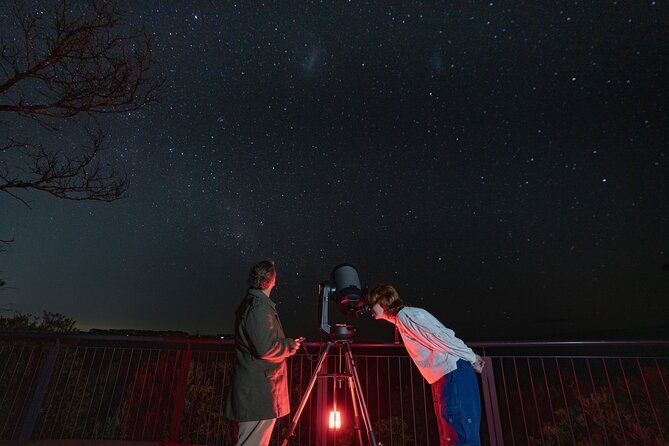
One hour to see stars you usually cannot. This Blue Mountains night tour pairs a professional-grade telescope with laser-guided constellation storytelling, led by an astrophysicist (think guides like Nathan, and on other nights Tom with Alka), so you’re not just looking up, you’re learning what you’re seeing.
My one watch-out is weather. Wind or cloud can change where you view from, and there’s an indoor planetarium option if the weather forces a switch.
In This Review
- Key Highlights You’ll Feel Right Away
- Blue Mountains Skies: Why This Part of Australia Hits Different
- The 90-Minute Flow: What Happens From Wentworth Falls to the Telescopes
- What You Might See: Moon Craters, Planets, Nebulae, and More
- The Moon
- Planets (and the fun surprises)
- Nebulae and deep-sky objects
- Double and triple stars
- Satellites (yes, sometimes)
- Price and Value: What $60.97 Buys You in Real Terms
- Meeting at Wentworth Falls Lookout Track: Logistics That Matter
- Weather and Wind: What Happens If the Sky Doesn’t Cooperate
- Why the Telescope Setup Feels Like Learning, Not Just Spectating
- Who This Tour Suits Best (And Who Might Want Another Plan)
- Tips to Get the Most Out of Your 90 Minutes
- Should You Book Stargazing With an Astronomer in the Blue Mountains?
- FAQ
- How long is the stargazing tour?
- Where does the tour start?
- How much does it cost?
- What can I see during the tour?
- Are drinks included?
- What languages are available?
- Is it accessible for wheelchairs or strollers?
- What happens if weather is bad?
- What’s the group size limit?
- Is a ticket required and do they use mobile tickets?
Key Highlights You’ll Feel Right Away
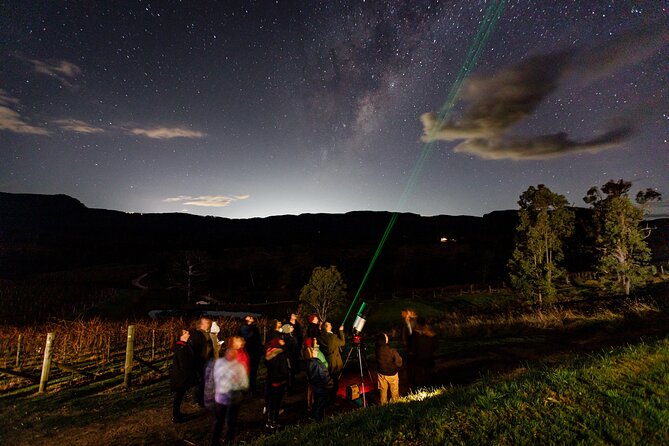
- Professional-grade telescope and astronomy binoculars, so you can switch between wide views and magnified objects
- Laser-guided constellation stories that help you spot patterns fast, not 30 minutes later
- Hot chocolates and warm drinks, with warm/cold options depending on conditions
- Q&A with an astrophysicist (yes, you can ask the real questions)
- Southern Hemisphere targets like the Southern Cross, the Orion Nebula, and planet views that vary by season
- Small group size (max 20), which keeps the night interactive rather than a crowd shuffle
Blue Mountains Skies: Why This Part of Australia Hits Different
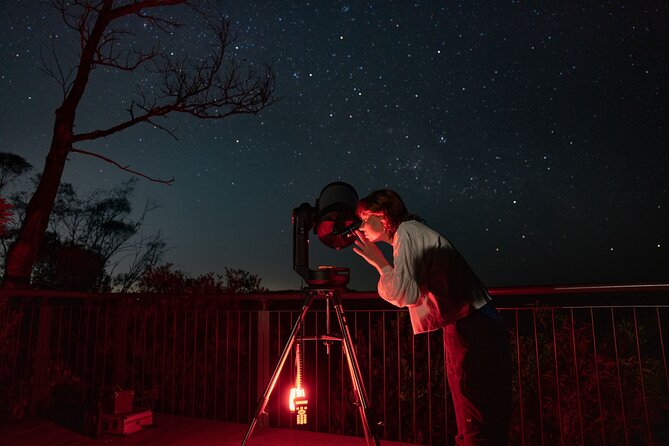
If you’ve mostly seen the stars from cities, you’ll notice the difference immediately. Out here in the Blue Mountains area, you’re under World Heritage-listed Greater Blue Mountains skies, which matters because dark skies make faint targets easier to pick out.
What I like about this stargazing tour is that it’s built for first-timers. You’re not handed a star chart and told good luck. You learn the patterns you’re actually looking at in the Southern Hemisphere—especially the big classics like the Southern Cross—and then the astronomer connects those naked-eye shapes to what the telescope can show you.
And because the tour time and season affect what’s visible, you get that good kind of uncertainty. Some nights emphasize the Moon’s detail or bright planets; other nights tilt toward nebulae, star clusters, and distant “smudges” that turn into real objects when you magnify them.
Other runs west to the escarpment
- Exclusive Blue Mountains Wildlife and Bushwalk Tour From Sydney
★ 4.5 · 1,087 reviews - Blue Mountains Sunset Waterfalls Wildlife Tour From Sydney
★ 4.7 · 897 reviews - Blue Mountains Day Tour With Bushwalks, Waterfalls & Featherdale
★ 5.0 · 305 reviews - Blue Mountains Hop On Hop Off Tour
★ 4.5 · 293 reviews
The 90-Minute Flow: What Happens From Wentworth Falls to the Telescopes
This is a 1 hour 30 minutes experience that starts and ends at the same place: Wentworth Falls Lookout Track. The timing is short enough that you’ll stay focused, but long enough for a real back-and-forth with the sky.
Here’s the typical pacing you can expect:
First, you gather and get oriented. You’ll get help understanding how to look up without wasting time. That orientation is what makes the next step work: laser-guided constellation storytelling. The laser isn’t just for pointing; it’s used to build a mental map so constellations start to click instead of floating randomly.
Next comes the hands-on part. You’ll have astronomy binoculars for wide-field views, then switch to the professional-grade telescope when the astronomer sets up for specific targets. This mix is a smart way to learn: binoculars help you understand where things are, and the telescope shows why “bright dot” is too simple of a label.
Then you get Q&A time. This is one of the best reasons to choose a guided session like this instead of solo stargazing. You can ask what you’re seeing right now, not what you wish you’d researched earlier.
Finally, you end back at the meeting point. It’s designed so you’re not wandering in the dark after the best part is over.
What You Might See: Moon Craters, Planets, Nebulae, and More
One of the most practical parts of this tour is that the viewing targets are explicitly tied to the time of year. That means you should expect variety, not a guaranteed checklist. Here are the types of sights you can look for:
The Moon
If the Moon is up, the telescope view can be a highlight. You might see craters and surface detail—the kind of view that turns the Moon from a symbol into a textured world.
Planets (and the fun surprises)
Depending on the night, you might get telescope views of Mars, Venus, Jupiter, and Saturn. Saturn’s rings are a star attraction, and with Jupiter you might catch moons in the right conditions.

Nebulae and deep-sky objects
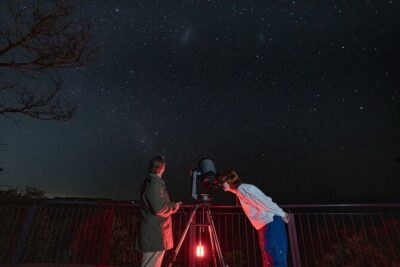
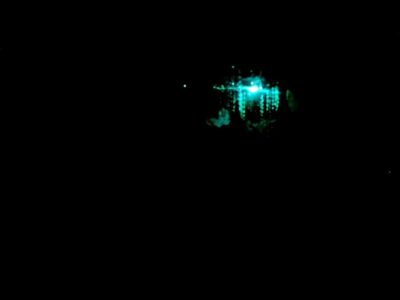
If you’re hoping for “wow, that’s not supposed to look like that” moments, keep your eyes open for the Orion Nebula (when it’s available), plus star clusters and deep space objects. Some nights include galaxies and views of the Milky Way—especially satisfying if you’ve never spent time learning the Southern sky.
Double and triple stars
These are a great learning target because they show how the universe can look different when you change magnification. You’ll get a clear sense of how two or three stars can sit close together and still be distinct.
Satellites (yes, sometimes)
On nights with good visibility, you may also spot satellites. That’s not always controllable, but it’s one of those “extra credit” moments that can happen during guided viewing.
Price and Value: What $60.97 Buys You in Real Terms
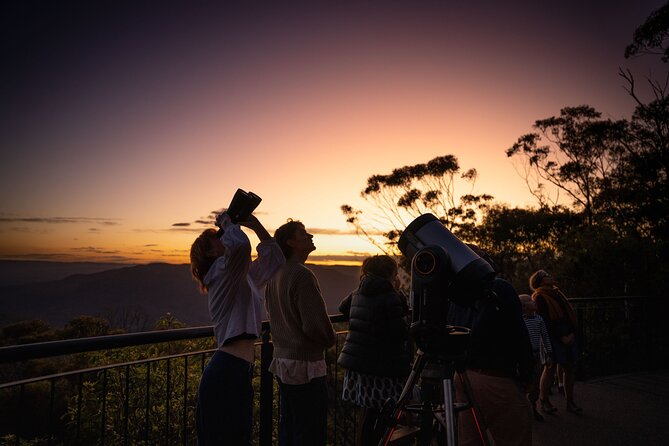
At $60.97 per person for about 90 minutes, the ticket isn’t cheap. But stargazing tours fail when they feel like a long chat and a quick telescope look. This one earns its price through three tangible things:
- A professional-grade telescope (not just a decorative scope)
- Guided targeting with laser help and astronomy binoculars
- A real astronomer with Q&A, so the experience adapts to what you’re curious about
Also, the group size stays reasonable—up to 20 people. Smaller groups usually mean more actual viewing time and fewer people straining around one setup.
One practical value point: if you tried to replicate this yourself, you’d still need dark-sky location, the right equipment, and the know-how to identify targets. This tour bundles the equipment and the guidance, then adds the comfort of hot chocolates and warm/cold drinks (weather dependent).
Meeting at Wentworth Falls Lookout Track: Logistics That Matter
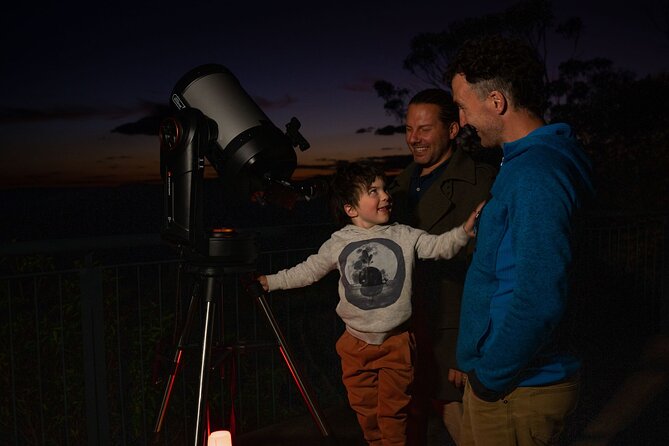
You’ll meet at Wentworth Falls Lookout Track in New South Wales, and the tour ends back at the same spot. That matters because in the middle of the night, simple logistics reduce stress.
A couple more useful notes based on what the experience offers:
- Mobile ticket is used, so have it accessible on your phone.
- It’s near public transportation, which is handy if you don’t want to drive in the dark.
- The tour supports service animals.
- It’s stroller and wheelchair accessible, with the outing designed to work for a range of mobility needs.
Stargazing can involve a mix of standing and waiting for the telescope set-up. If you bring a stroller, wheelchair, or need extra space, it’s smart to arrive a bit early so you’re not squeezed into the first available spot when the session starts.
Weather and Wind: What Happens If the Sky Doesn’t Cooperate
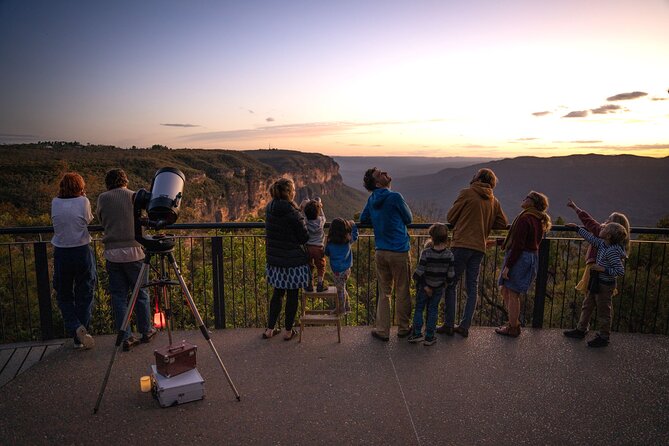
This is the part you should respect. Stargazing is one of those activities that lives and dies by the sky.
Here’s how it’s handled:
- In bad weather, you’ll be contacted at 1 pm on the day with two options.
- Option one: receive a gift voucher/credit to reschedule. It’s transferable and valid for 3 years.
- Option two: switch to an indoor 90-minute planetarium-style astronomy tour inside a dome with projector and cinema experience, but the indoor run needs a minimum of 8 guests.
Also pay attention to their confirmation rule: if you don’t get an email by 1 pm, it indicates the stargazing tour is confirmed.
One more reality check: wind can affect viewing. On some nights, the viewing location may shift due to conditions, even if the event proceeds. That doesn’t mean you’ll lose the whole experience—it just means your best viewing spot might not be the original lookout.
Why the Telescope Setup Feels Like Learning, Not Just Spectating
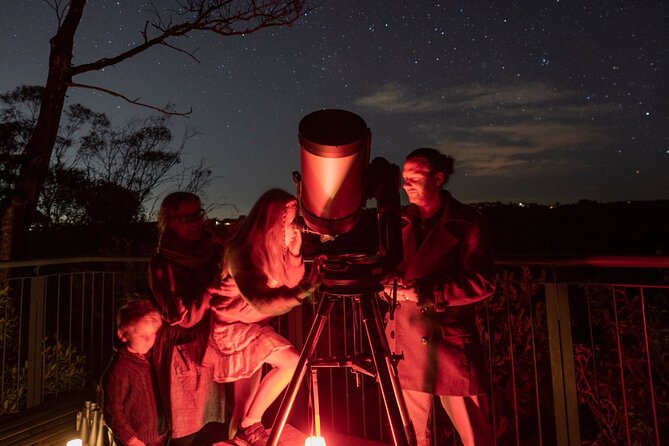
A lot of stargazing experiences fail because they point at objects and stop there. This tour does something better: it connects what you see with how to recognize it.
The laser-led constellation storytelling helps you establish a sky framework in real time. Then the telescope shows what your eyes can’t easily separate on their own. When you can place an object in a constellation pattern and then see it magnified, you get a complete loop: locate, identify, observe.
That loop is also why the tour works for different comfort levels. If you’re a complete beginner, you’ll lean on the guide to translate the sky. If you already have some familiarity, you can use the telescope time to verify details like rings, moons, nebula structure, or close star pairs.
And because there’s Q&A, you can ask why something looks a certain way, or what you’re likely seeing right now. This is where the guide’s long experience shows up—not as big lectures, but as quick, clear answers.
Who This Tour Suits Best (And Who Might Want Another Plan)
This is a strong choice if:
- You’re seeing the Southern Cross and Southern Hemisphere constellations for the first time
- You want real telescope viewing, not just a quick look
- You enjoy hands-on explanations and asking questions
- You’re traveling with mixed ages and want a structured night activity
It may be less ideal if:
- You hate waiting for conditions to settle and want guaranteed views of specific targets every time
- You’re short on patience for brief orientation and then group telescope turns
- You’re only available on one date and can’t flex if weather forces a switch or voucher option
If you’re coming from Sydney or staying in the area for a quick stop, this tour makes sense as an evening activity. It’s also a nice “first astronomy outing” because you’ll leave with recognizable patterns, not only photos of lights.
Tips to Get the Most Out of Your 90 Minutes
I’d treat this like a mini workshop with a night-sky reward. A few practical moves help:
- Dress for cold. Even with warm/cold drinks included, night air can feel sharp at elevated lookouts.
- Keep your eyes on the sky, not your phone. You want darkness adaptation, and the guide will be pointing with intent.
- Ask questions early. If you want to know what you’re seeing, bring it up while you’re still on the main constellations.
- Don’t worry if you miss something. The astronomer adjusts target focus based on what’s visible that night, so the experience remains coherent even when the sky changes.
And yes, the hot chocolate is part of the experience. It’s a simple comfort that also keeps you from rushing back to warmth too soon.
Should You Book Stargazing With an Astronomer in the Blue Mountains?
If you want a guided stargazing night that feels educational and practical, I think this one is worth it. The professional-grade telescope, laser-led constellation storytelling, and Q&A with an astrophysicist create a setup where you’ll actually understand what you’re seeing—not just stare at it.
Book it especially if:
- you’ve never seen the Southern sky properly,
- you want telescope views of Moon/planets or nebulae,
- and you can be flexible if weather shifts the plan at 1 pm.
Skip it or reconsider if your schedule is rigid and you can’t handle a possible switch to the indoor planetarium option. Stargazing is magical, but it’s also at the mercy of wind and cloud.
In short: if you’re ready to trade a standard night out for a real night-sky lesson, this tour gives you a strong return on time and money.
FAQ
How long is the stargazing tour?
The tour runs for about 1 hour 30 minutes.
Where does the tour start?
It starts at Wentworth Falls Lookout Track in New South Wales, Australia, and ends back at the meeting point.
How much does it cost?
The price is $60.97 per person.
What can I see during the tour?
Depending on the night and time of year, you might see the Moon, planets like Mars, Venus, Saturn, and Jupiter, Orion Nebula, star clusters, double and triple stars, deep space objects, and the Milky Way.
Are drinks included?
Yes. Warm or cold drinks are provided depending on the weather, and complimentary hot chocolates are included.
What languages are available?
The tour is available in English and French.
Is it accessible for wheelchairs or strollers?
Yes. The experience is wheelchair and stroller accessible.
What happens if weather is bad?
At 1 pm on the day, you’ll be offered two options: a gift voucher/credit to reschedule (transferable and valid for 3 years), or an indoor 90-minute planetarium astronomy tour if there are at least 8 guests.
What’s the group size limit?
The tour has a maximum of 20 travelers.
Is a ticket required and do they use mobile tickets?
Yes. It’s a mobile ticket experience.
More Tour Reviews in Blue Mountains

West to the Blue Mountains, Again
Fresh off the jetty: more Blue Mountains reviews

Blue Mountains Day Trips, compared.
 ★ 5.0All Inclusive Blue Mountain,Scenic World,Lunch,Koalas,ferryFrom $2047,832 reviews
 ★ 4.5From Sydney: Blue Mountains Full-Day TripFrom $1484,471 reviews
 ★ 5.0Blue Mountains Small-Group Tour from Sydney with Scenic World,Sydney Zoo & FerryFrom $1613,709 reviews
 ★ 4.8Blue Mountain Small Group Scenic World, Wildlife, WaterfallFrom $1483,428 reviews
 ★ 4.5Blue Mountains Day Trip from Sydney Including Scenic WorldFrom $1502,420 reviews
 ★ 4.8From Sydney: Blue Mountains Tour with Waterfall Walk & LunchFrom $852,400 reviews
 ★ 4.7Blue Mountains Adventure: Scenic World, Zoo & Koala PhotoFrom $1442,062 reviews
 ★ 4.5Blue Mountains Day Tour Including Parramatta River CruiseFrom $681,585 reviews
Browse the lists this tour appears in