Reviewed · SYDNEY
Western Sydney: Junior Tree Ropes Courses
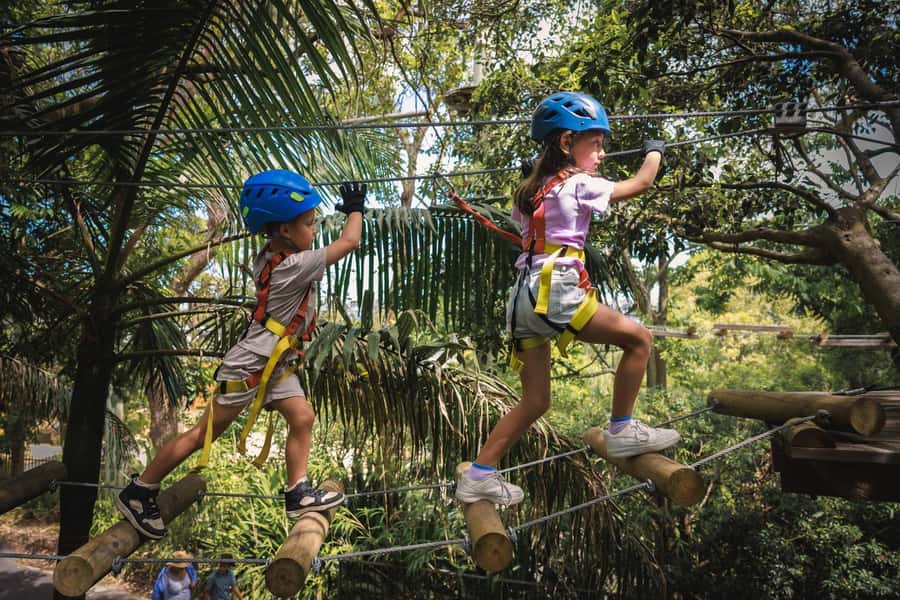
Treetops for tiny adventurers sounds like a tall order, and this one is built for it. At Western Sydney Parklands, the Junior Tree Ropes Courses let kids ages 3-7 swing, climb, balance, and try mini challenges at low height, with friendly instructors on hand. I like that it is set up as four purpose-built routes, so your child can move at their comfort level and still feel like they did something real. I also love the focus on continuous safety systems, which means you are not stuck worrying the whole time while they explore.
The main thing to consider is that the youngest kids may not tackle every stage the same way as older children, and some kids need a moment to warm up once they see the height and equipment. Plan for that, and build in patience at check-in.
In This Review
- Key things I’d want you to know
- Western Sydney Parklands treetops for ages 3 to 7
- How the four junior courses are built for little balance
- Check-in at Treetops Adventure reception and what happens before climbing
- Course by course: bridges, swinging logs, and mini ziplines
- Junior course style 1: wobbly bridges and balance control
- Junior course style 2: swinging logs and controlled momentum
- Junior course style 3: mini zip lines for speed without the big fear
- Junior course style 4: finishing obstacles at the right level
- Adult supervision from the ground: your role in keeping it calm
- 150 minutes on the clock: how it usually feels with kids
- Nature moments: kookaburras, fresh air, and why that matters
- Price at $26: what you’re really paying for
- What to bring and what to wear for comfort and grip
- Who should book, and when to skip it
- Should you book Western Sydney Junior Tree Ropes Courses?
- FAQ
- What ages are the Junior Tree Ropes Courses for?
- How long is the experience?
- What does the price include?
- Where do we check in?
- What should we bring?
- What should kids and adults wear?
- Do adults climb in the trees?
- Can we cancel for a full refund?
Key things I’d want you to know
- Ages 3–7 fit the low-height design, with challenges scaled to little bodies and little courage
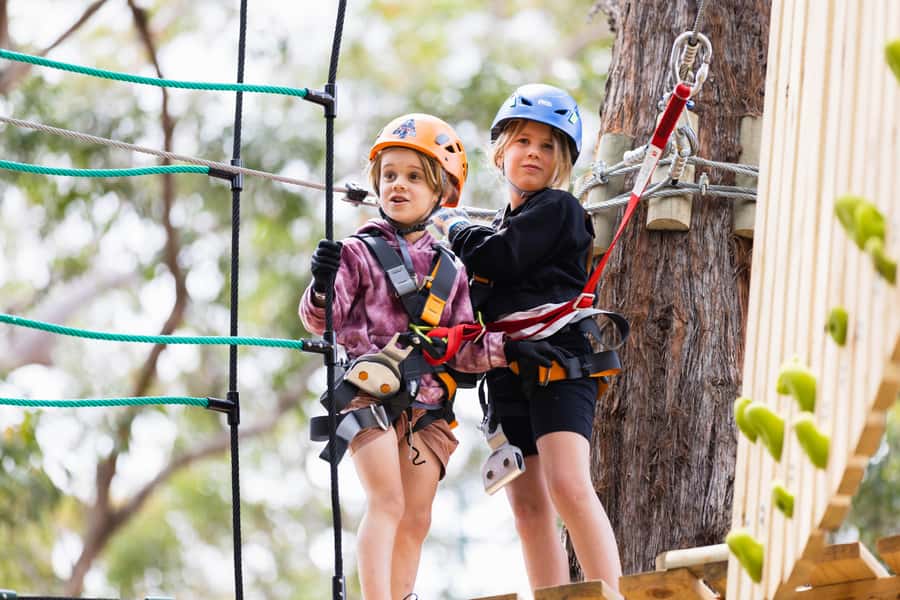
- Continuous safety systems help kids climb and move with support built into the setup
- Four junior routes mean a mix of obstacles like wobbly bridges, swinging logs, and mini ziplines
- Adults supervise from the ground, so you get to be the calm voice, not the harness helper
- Small groups up to 10 participants keep the experience feeling personal
- Bring a plan for comfort items like sunscreen, water, insect repellent, and closed-toe shoes
Western Sydney Parklands treetops for ages 3 to 7
This is the kid version of a treetop ropes adventure, and it is aimed squarely at ages 3 to 7. That matters, because at this age range, the real win is confidence. You are not just buying an activity ticket. You are giving your child a safe, guided shot at doing something slightly scary, then realizing they can handle it.
Western Sydney Parklands provides the setting: fresh air, lots of outdoor space, and plenty of chances to spot wildlife while you wait for your time window. The experience explicitly encourages keeping an eye out for kookaburras, which is a fun little way to turn waiting and transitions into something the kids look forward to.
The other thing I like about the age focus is that it keeps expectations realistic. A 6-year-old often has the coordination to enjoy more of the moving obstacles, while a 3-year-old may only be ready for the first couple of stages. If you have a mixed-age group, this setup helps you manage that difference without turning the day into a battle.
Weighing this one up? Here is how it sits against a few Sydney favourites:
- Sydney: Opera House Guided Tour with Entrance Ticket
★ 4.8 · 8,312 reviews - All Inclusive Blue Mountain,Scenic World,Lunch,Koalas,ferry
★ 5.0 · 7,832 reviews - From Sydney: Blue Mountains Full-Day Trip
★ 4.5 · 4,471 reviews - Sydney Opera House Official Guided Walking Tour
★ 4.5 · 3,770 reviews
How the four junior courses are built for little balance
You will spend your time working through four specially designed Junior Tree Ropes Courses. Each one is made for the right kind of challenge: not huge heights, not intimidating spans, and not a you figure-it-out-your-own way of doing ropes.
What makes the courses feel kid-friendly is the combination of:
- lower obstacle heights for younger adventurers
- continuous safety systems rather than a single make-or-break moment
- obstacles that look like play once you are up there, like bridges, logs, and mini zip elements
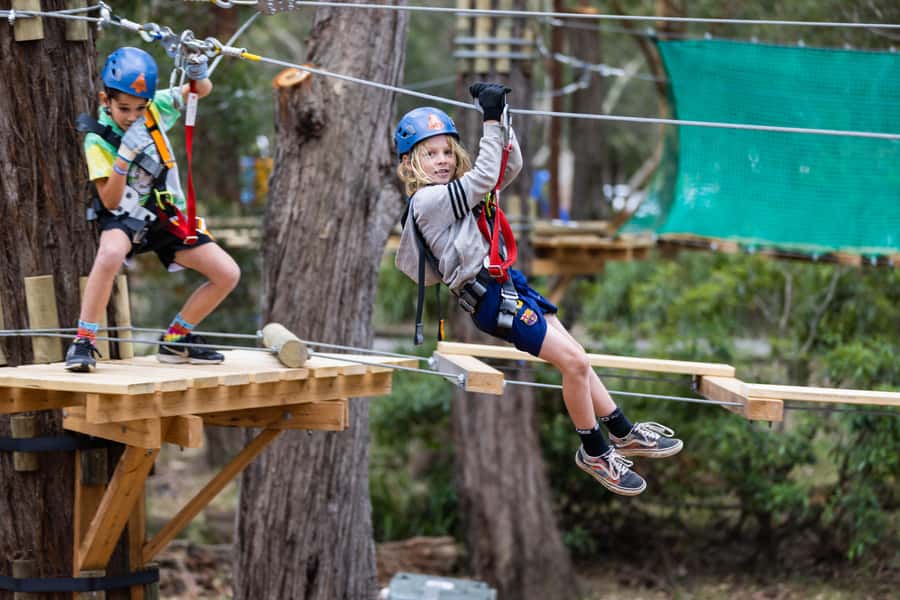
The courses include features such as wobbly bridges, swinging logs, and mini ziplines. Even without calling them training drills, these are the skills kids naturally practice when they concentrate: stepping accurately, holding on without freezing, and moving with timing instead of rushing.
One practical takeaway for parents: this is not the kind of activity where your child benefits from being pushed to go faster. It is better when they build trust one station at a time. If your child can stay relaxed while changing platforms, the whole course feels easier.
Check-in at Treetops Adventure reception and what happens before climbing
Your day starts with check in at Treetops Adventure reception. This is where the whole flow begins: you show up, you get oriented, and you get your child ready for the safety steps.
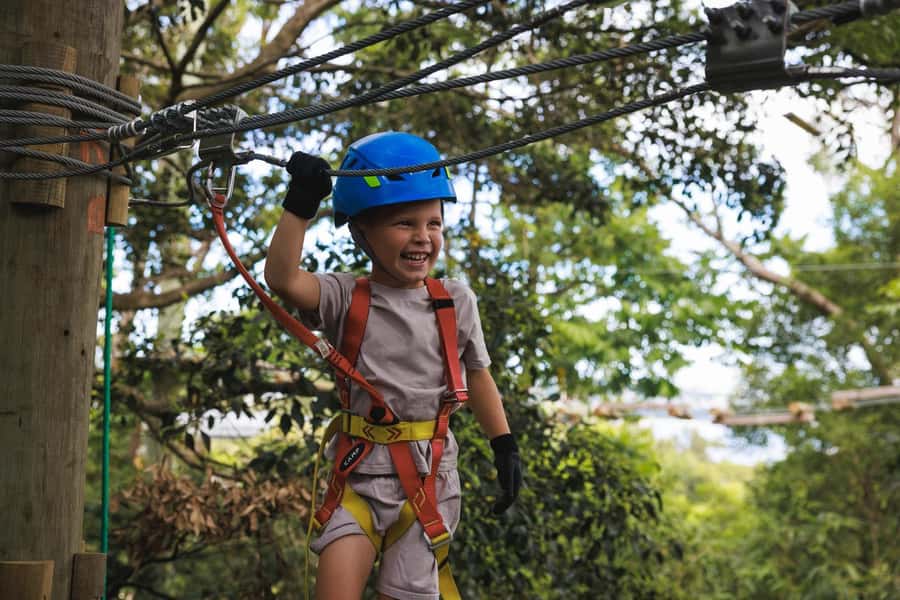
Then comes the safety briefing and gear setup. The experience includes safety equipment and briefing, delivered by friendly instructors. You also need to arrive 15 minutes before your booked time so the briefing does not eat into your climbing window.
I think that early buffer is important with kids. If you show up late, you end up trying to switch your child from normal playground mode to treetop mode under pressure. Giving yourself the extra time makes the transition smoother for everyone, including you.
Also keep in mind that your child must be accompanied by an adult. Adults do not just drop off and wander away. You stay involved, and the instructors use that team approach to keep the day steady.
Course by course: bridges, swinging logs, and mini ziplines
You do four junior routes, and each one is built around a different kind of movement challenge. The exact route order can vary by time and group, but the experience centers on the same obstacle types you should expect for little climbers.
Junior course style 1: wobbly bridges and balance control
Early challenges often lean into balance. For kids, that means learning to trust their feet and keep their body steady while something shifts under them. A wobbly bridge is a great confidence builder because it is obvious right away what the goal is: move across, keep your eyes on the next step, and hold on when needed.
The drawback is also predictable: some kids freeze when they feel the sway. If that happens, stay calm. The best strategy is to let the instructor help your child find the rhythm, not to coach them into a sprint.

Junior course style 2: swinging logs and controlled momentum
Next up are obstacles like swinging logs. This is where many kids start having real fun, because it looks like play. But it also requires coordination. They need to time their grip, step with care, and not yank themselves forward.
Parents can help the most by encouraging slow breaths and steady movement. If your child tries to rush, gripping gets tense and that tension can make the obstacle feel harder than it is.
Junior course style 3: mini zip lines for speed without the big fear
The experience includes mini ziplines, which usually land as the favorite moment for kids who are ready for it. It gives that whoosh feeling without the towering scale that older zip lines sometimes have.
If your child is hesitant, it is still worth seeing how far they want to go. Even a partial run can build a sense of achievement. And if they are not keen, you can treat it as a win that they stayed in the game long enough to try.
Junior course style 4: finishing obstacles at the right level
The fourth course is designed to keep momentum going. By this point, many kids have warmed up, so the final segment often feels easier because they already understand what harnessed movement feels like and how instructors guide the next station.
One parent note based on what I think often happens with this age range: the youngest kids might not go through every stage the same way as older kids. If you have a 3- or 4-year-old, expect the day to be shorter in terms of which elements feel doable. That is normal for this kind of course design.
Adult supervision from the ground: your role in keeping it calm
Adults supervise from the ground. That is a big deal, because it means you are not suited up and climbing too. Your job is to be the grounding presence while the instructor leads the safety and technique side.
In practice, you will do best by:
- watching for the moment your child needs encouragement
- letting instructors handle the hands-on steps
- keeping your tone simple and steady when your child looks unsure
This is also why the small-group size matters. With limited to 10 participants, instructors can manage attention and pacing. You feel that difference when your child needs a quick reset at a station, because they are not competing with a huge crowd for one-on-one moments.
If your child gets wobbly or stops short, do not rush them with loud urgency. A calm presence helps them look forward instead of spiraling into fear.
150 minutes on the clock: how it usually feels with kids
The total time is 150 minutes, including the safety briefing and course time. For families, that length is usually right for this age group. It is long enough for more than one meaningful challenge, but short enough that you are not dragging sleepy kids through a full afternoon of waiting.
You should also know that the experience is not designed to feel like a strict treadmill. There is room for natural pacing, especially when you have mixed ages or a child who needs extra warm-up time.
One smart move is to treat the first 20 to 30 minutes as adjustment time. The check-in, gear, and briefing are where the day gets established. If your child goes from zero to treetop immediately, they might struggle. If they get a brief moment to settle, they often do much better once they start.
Nature moments: kookaburras, fresh air, and why that matters
This is not an indoor attraction where everything is controlled and identical. It takes place in Western Sydney Parklands, so the experience comes with outdoor atmosphere.
That matters because it changes the whole emotional texture for kids and adults. Fresh air helps kids reset between attempts, and the natural setting makes the treetop adventure feel like part of an actual day outside, not like a rushed activity stop.
The highlight specifically mentions looking for kookaburras. Whether you see them or not, the point is the same: it encourages you to slow down just enough to notice what is around you. For many families, that is what turns a simple outing into a memory.
Also, because it is outdoors, come prepared for the basics of Australian weather. Sun protection and water are not optional extras here.
Price at $26: what you’re really paying for
At $26 per person for about 150 minutes, this sits in the “reasonable family activity” category, especially considering that kids get access to four junior treetop courses plus safety equipment, briefing, and instruction.
The value is not only the gear or the course count. It is the fact that this is purpose-built for ages 3 to 7 with low height and a safety structure designed for first-timers. When you pay for a general ropes course, you often pay for something you cannot use fully because the height and difficulty are wrong for your child. Here, the design matches the audience.
Two practical value points:
- Small groups (up to 10) usually mean fewer delays and more attention.
- Adults stay on the ground, which keeps the cost and complexity lower than experiences where adults need additional gear or training.
If you are deciding between this and another outdoor activity, think about what your child needs right now: movement, confidence, or simply something fun in nature. For many kids in this age bracket, the answer is exactly what this delivers.
What to bring and what to wear for comfort and grip
The activity lists clear essentials, and I strongly agree with all of them.
Bring:
- comfortable shoes
- sun hat
- sunscreen
- water
- insect repellent
Wear:
- comfortable clothing
- closed-toe shoes
Why this matters: ropes courses are mostly about foot placement and grip. Socks-only adventures or open-toe shoes can create needless discomfort right when your child needs confidence.
Also, your day will run outdoors, so plan for sun and bugs as part of the experience, not as an afterthought. And because the setup includes safety gear, it is easier if your child wears clothes that move well and do not restrict arm movement.
One minor comfort planning tip: there may not be a toilet right next to the course area, so handle bathroom needs before you start, especially if you have a young child who does not like delays.
Who should book, and when to skip it
This activity is a great match for:
- families with kids aged 3–7 who like climbing and outdoor play
- parents who want supervised treetop challenges without suiting up
- first-time adventurers who need safety structure and instructor support
It may not be the best fit if:
- your child is under 3
- you are planning for someone who is pregnant
- you are dealing with mobility impairments
That last point is not about attitude. It is about safety and the nature of treetop movement. If your child or family member falls into one of these categories, it is worth looking for a different Western Sydney activity that matches your needs better.
If you have a child who is nervous, consider this a try-on-adventure. Some kids warm up fast once they are up there. Others need reassurance and may prefer watching more than rushing forward. The best outcome comes when you let the instructor guide the pace.
Should you book Western Sydney Junior Tree Ropes Courses?
Book it if you want a child-focused treetop experience built for first-timers, with continuous safety systems, four different junior obstacles, and a manageable 150-minute time block. At $26, it is also priced in a way that feels realistic for a family outing, not a once-a-year splurge.
Skip it if you know your child is not interested in heights or hands-on movement today, or if anyone in your group falls into the stated non-suitable categories. In those cases, you will get more joy from an activity that matches comfort and mobility from the start.
If you do book, show up early, dress for grip and sun, and keep your tone simple. The best part of a junior ropes course is not the finish line. It is the moment your child realizes the next step is possible.
FAQ
What ages are the Junior Tree Ropes Courses for?
They are designed for children aged 3 to 7.
How long is the experience?
The duration is 150 minutes.
What does the price include?
The activity includes four Junior Tree Ropes Courses, safety equipment and briefing, and friendly instructors.
Where do we check in?
Check in at Treetops Adventure reception.
What should we bring?
Bring comfortable shoes, a sun hat, sunscreen, water, and insect repellent.
What should kids and adults wear?
Wear comfortable clothing and closed-toe shoes.
Do adults climb in the trees?
No. Adults supervise from the ground, while children climb the courses with instructor support.
Can we cancel for a full refund?
Yes. You can cancel up to 24 hours in advance for a full refund.
More Tour Reviews in Sydney
- Blue Mountains Small-Group Tour from Sydney with Scenic World,Sydney Zoo & Ferry
★ 5.0 · 3,709 reviews