
Reviewed · SYDNEY WALKING TOURS
Sydney Queer Walking Tour
Sydney’s queer story isn’t one straight line. It’s written into streets, statues, and the gaps history left behind. This Sydney Queer Walking Tour connects colonial-era context to the big public moment of Mardi Gras, then follows the hard years through HIV-era activism and protest.
Two things I love here: the focus on hidden queer histories in everyday public spaces, and how the guide ties places to real social change instead of treating them like photo stops. There’s also a strong sense of momentum, from quieter backstreet stories to the energy around Taylor Square.
One thing to consider: some of the topics covered—like the impact of HIV—can feel heavy, so this is best if you’re up for thoughtful, sometimes sobering storytelling.
In This Review
- Key Things I’d Plan For
- Why This Sydney Queer Walking Tour Makes the City Click
- Meeting Point at Law Courts Library, Then a Focused 2-Hour Walk
- Stop 1: Archibald Memorial Fountain and the Idea of Hidden Queer Footprints
- Stop 2: Emden Gun at Whitlam Square and the Media Fuel of the 1970s
- Stop 3: Green Park Backstreets, Plus a Coffee or Tea Break
- Stop 4: Kinselas Hotel and the June 1978 First Mardi Gras at Taylor Square
- Guides, Storytelling Style, and Why This Tour Keeps Your Attention
- Price and Value: Is $53.79 Worth It?
- Practical Tips So You Enjoy It More
- Who Should Book This (and Who Might Prefer Something Else)
- Should You Book the Sydney Queer Walking Tour?
- FAQ
- What is the duration of the Sydney Queer Walking Tour?
- How much does the tour cost?
- Where do I meet the tour guide?
- Where does the tour end?
- Is there a mobile ticket?
- How many people are in the group?
- Are service animals allowed?
Key Things I’d Plan For
- Small group (max 12): easier questions, better pacing, and less time waiting.
- Mobile ticket: you’ll have what you need on your phone.
- 2 hours, four major stops: the story moves in chunks, not in one lecture.
- Mardi Gras spotlight on 1978: the tour ends with why the June 1978 moment still matters.
- Darlinghurst backstreets + coffee/tea chance: you get a breather mid-walk.
- You’ll cover colonial to 1970s-to-now changes: including Indigenous context and later reform-era activism.
Why This Sydney Queer Walking Tour Makes the City Click
Sydney can look straightforward if you only notice the big sights. This tour teaches you to read the city sideways—through the places where queer life was present but often left out of official accounts.
What I like is that the tour doesn’t treat queer history as only one era. You start with the idea that some histories are “hidden” and then move forward through colonial times, the early 20th century, and into the major social upheaval reforms that hit the mainstream from the 1970s onward. That matters because it shows you how patterns repeat: visibility, pushback, organizing, and gradual change.
The guide also frames what you’re hearing as part of a bigger cultural shift—where public celebration like Mardi Gras sits right alongside protest, media attention, and serious health crises. In other words, you’re not just learning dates. You’re learning why those dates turned into turning points.
Sydney at footpace, a few more routes
- Sydney Opera House Official Guided Walking Tour
★ 4.5 · 3,770 reviews - Sydney The Rocks Guided Walking Tour
★ 5.0 · 1,546 reviews - Sydney: The Rocks 90-Minute History Walking Tour
★ 4.7 · 1,092 reviews - Sydney Cricket Ground (SCG) and Museum Walking Tour
★ 4.9 · 616 reviews
Meeting Point at Law Courts Library, Then a Focused 2-Hour Walk
You’ll meet at Law Courts Library, 184 Phillip St at 9:30 am, and the tour runs about two hours. It’s a compact format, which helps if you want meaningful context without burning half your day.
The route is designed for walking, with stops that are close enough to keep you moving and engaged. Each stop gets its own block of storytelling time, so you’re not just hearing random facts while you shuffle along.
Starting near the courts also sets a theme: law, rights, public space, and who gets recognized. By the time you’re heading toward Darlinghurst and Taylor Square, it feels like the story has traveled from behind-the-scenes life into the spotlight.
Stop 1: Archibald Memorial Fountain and the Idea of Hidden Queer Footprints
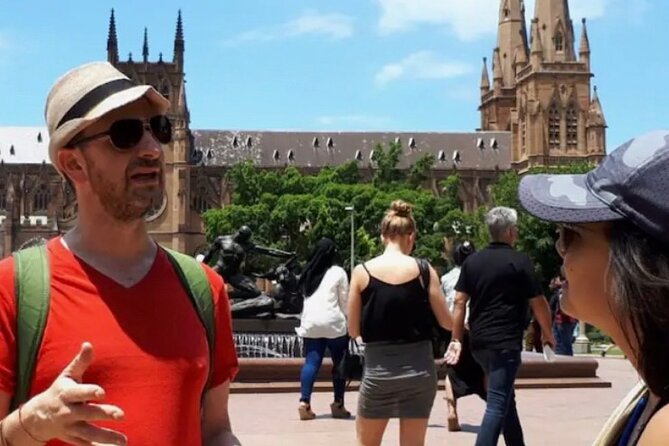
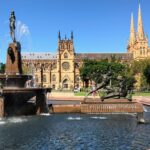
The first stop is the Archibald Memorial Fountain, where the tour starts by pointing out how queer history often sits just out of view. The fountain becomes a symbol for that broader theme: what we know exists, but it doesn’t always come with clear labels or easy documentation.
This opening matters because it changes how you’ll look at everything after. Instead of assuming history is neatly preserved, you start noticing gaps and asking why they exist. The tour sets up the timeline from colonial times into the 1970s, and it also touches Indigenous Australia’s view on diverse sexual orientation and gender—an angle that helps you understand that queer experiences aren’t only a modern urban story.
What you might like most at this stop is the way it reframes “ordinary” city landmarks. Even if you’ve passed by places like this before, you’ll start seeing them as part of the city’s memory system.
Stop 2: Emden Gun at Whitlam Square and the Media Fuel of the 1970s
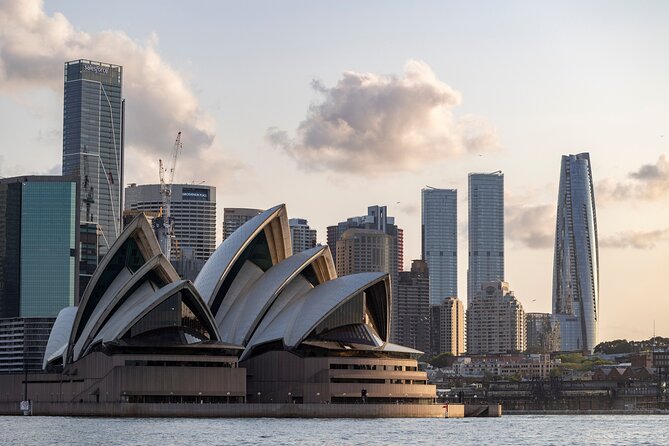
Next you move to Whitlam Square and the Emden Gun area, where the tour turns toward the beginning of the gay rights era. This is where the story starts feeling more public and confrontational.
You’ll hear how the early 1970s push for fairness and equality gathered momentum, and the tour highlights the role of media in how these struggles were seen and spread. That detail is useful for you because it connects history to a pattern you still recognize today: coverage can bring attention, pressure, and opportunity—or it can distort and target.
This stop also helps you understand the difference between private identity and public rights. The tour frames the shift as part of broader reform-era change that didn’t stay in one community bubble. It broke into mainstream discussion, and that’s when backlash and organizing both grew.
Practical note: this is still part of the walking phase, so if you like to take photos, do it quickly. The story here is the main event.
Stop 3: Green Park Backstreets, Plus a Coffee or Tea Break
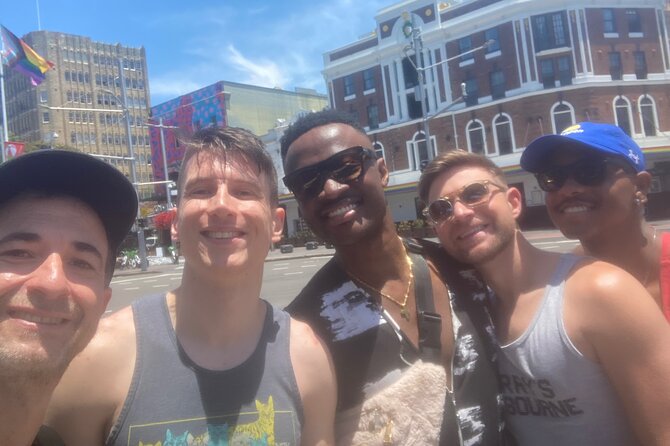
Then you head through Darlinghurst backstreets to Green Park, and this is where the tour gets more human-scale. The walking lanes feel more like neighborhoods than sightseeing loops, which matches the theme: queer history didn’t happen only in grand buildings. It happened in everyday places—homes, streets, and social spaces where people found each other.
The stop includes a coffee/tea break along the way at a local café. It’s not just a pause; it gives your brain space to process the heavier themes building up in the story. Since the tour covers the HIV epidemic period, that reset matters.
You’ll hear how Sydney handled that crisis and how it shaped social attitudes, activism, and survival. I like that the tour doesn’t treat HIV as a sidebar. It’s part of the same larger story of protest, community resilience, and the long grind of change.
If you’re sensitive to emotional topics, this is a good time to check in with yourself. You’ll still want to keep going, but you’ll be glad there’s a breathing moment here.
A few more Sydney walks, at your own pace


Stop 4: Kinselas Hotel and the June 1978 First Mardi Gras at Taylor Square
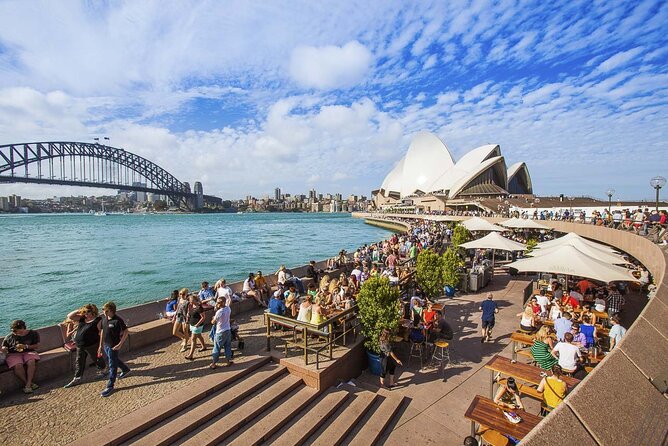
The final stop is the Kinselas Hotel area at Taylor Square, ending near the Sydney Sustainable Markets at Oxford Street and Bourke Street. This is where the tour’s timeline locks into one iconic moment: June 1978, the first Mardi Gras.
The tour explains why that moment still pulls people in, even decades later. Mardi Gras isn’t just an event—it’s presented as a public claim: visibility, pride, and the refusal to go quietly. And because the tour also covers the decades that followed—protest, partying, and ongoing impact from HIV—you’ll understand Mardi Gras as both celebration and a response to real threats.
This ending works well because it’s where your earlier perspective pays off. At the start, you learned to notice what’s missing. Here, you see what happens when queer communities take public space and make it impossible to ignore.
It also feels good for your timing. If you finish around Taylor Square, you’re close to food and onward plans without needing to reorganize your day.
Guides, Storytelling Style, and Why This Tour Keeps Your Attention
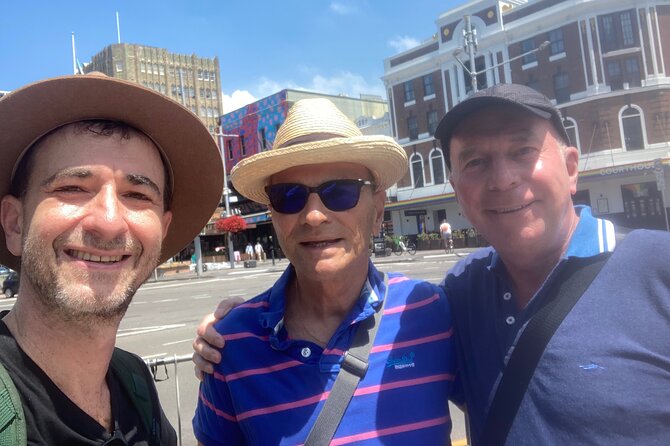
From what the tour’s described style suggests, the experience is built around storytelling that stays lively, not dusty. A highlight is the guide Michael, who’s praised for keeping the group engaged for the whole tour.
That kind of pacing matters more than most people expect. A history tour can turn into a slow march of names and dates. Here, the structure by stop keeps you from zoning out, and the shift from colonial context to the 1970s rights era to Mardi Gras gives your brain clear transitions.
There’s also something quietly respectful about how the tour handles sensitive material. Instead of sensationalizing, it uses place and timeline to explain how queer life was shaped by laws, media attention, and public health realities.
Price and Value: Is $53.79 Worth It?
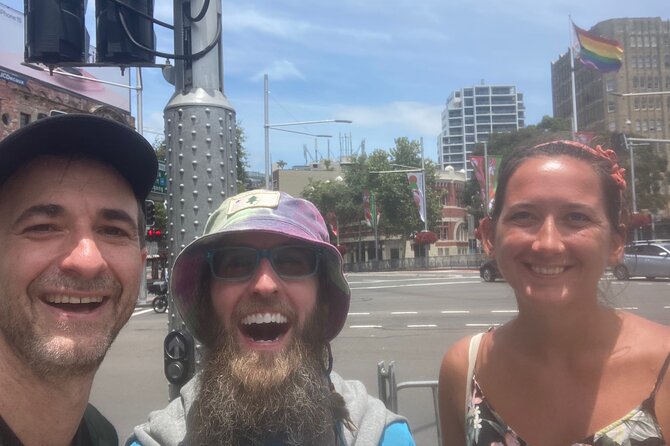
The tour costs $53.79 per person for about two hours, and it’s capped at 12 travelers. That group size is a big part of the value—smaller groups usually mean you spend less time waiting and more time actually hearing the story.
You’re also paying for context. This isn’t just walking past landmarks; it’s connecting them to queer lives across a long stretch of time. The stops are free to access, and the tour uses outdoor spaces, meaning you’re not paying extra for admissions.
And since it’s a mobile ticket, you avoid the friction of complicated paper pickup. That small convenience adds up when you’re also managing a morning start at 9:30 am.
One more point: the tour shows steady momentum lately (there have been 5+ bookings in the last month), which usually lines up with something working—either the route, the guide experience, or both.
Practical Tips So You Enjoy It More
A few things I’d do to make the walk smoother:
- Wear shoes that can handle uneven sidewalks. This is a walking itinerary, and you’ll want to stay comfortable.
- Bring water. Even in cooler months, two hours with stops adds up.
- Plan for a coffee/tea stop at Green Park. If you want it, you’ll likely be ordering on your own.
- Keep your phone ready for the mobile ticket—but don’t let photos steal your hearing time.
- If you’re using public transport, give yourself buffer time for the 9:30 am start. The meet point is in a central area, but mornings still move fast.
Also, since the tour covers topics like HIV and protest, it’s okay if the mood turns serious. That’s part of the point.
Who Should Book This (and Who Might Prefer Something Else)
This tour is ideal if you:
- Want queer LGBTQ history that connects stories to specific places.
- Like walking tours that teach you how to read neighborhoods, not just check off landmarks.
- Are comfortable with a timeline that spans colonial-era context, early 20th century, and big social change from the 1970s onward.
It’s also a great fit if you’re interested in Mardi Gras beyond the parade version—because the tour focuses on the 1978 beginning and the pressure, protest, and community work around it.
If you’re looking for a purely party-focused itinerary, this won’t be that. It’s celebration with context, and it can get emotional.
Should You Book the Sydney Queer Walking Tour?
Yes—if you want a thoughtful, place-based way to understand Sydney’s queer past and present. At $53.79 and around two hours, it’s a concentrated experience with four meaningful stops and a clear storyline from early context to the first Mardi Gras in 1978.
Book it especially if you value human-scale storytelling and a guide who can keep the whole group engaged—like Michael, who’s repeatedly credited with holding attention from start to finish.
Skip it only if you’re not up for sensitive topics (including HIV-era impacts) or if you prefer history told through museums rather than street-level landmarks.
FAQ
What is the duration of the Sydney Queer Walking Tour?
The tour lasts about 2 hours.
How much does the tour cost?
The price is $53.79 per person.
Where do I meet the tour guide?
You meet at Law Courts Library, 184 Phillip St, Sydney NSW 2000.
Where does the tour end?
It ends near Sydney Sustainable Markets at Taylor Square, Oxford Street at the intersection with Bourke Street, Darlinghurst NSW 2010.
Is there a mobile ticket?
Yes, the tour uses a mobile ticket.
How many people are in the group?
The tour has a maximum of 12 travelers.
Are service animals allowed?
Yes, service animals are allowed.
More Tours in Sydney
- Blue Mountains Small-Group Tour from Sydney with Scenic World,Sydney Zoo & Ferry
★ 5.0 · 3,709 reviews



More Tour Reviews in Sydney
- Blue Mountains Small-Group Tour from Sydney with Scenic World,Sydney Zoo & Ferry
★ 5.0 · 3,709 reviews


Sydney on Foot: More Walks


Fresh off the jetty: more Sydney reviews



Sydney Walking Tours, compared.
 ★ 4.5Sydney Opera House Official Guided Walking TourFrom $343,770 reviews
 ★ 5.0Sydney The Rocks Guided Walking TourFrom $321,546 reviews
 ★ 4.7The Rocks 90-Minute History Walking TourFrom $321,092 reviews
 ★ 4.9Sydney Cricket Ground (SCG) and Museum Walking TourFrom $23616 reviews
 ★ 5.0Behind The Scenes: Sydney Cricket Ground (SCG) Guided Walking TourFrom $25581 reviews
 ★ 5.0Ultimate Sydney Walking Tour (Small-Group, Drink Included)From $57514 reviews
 ★ 5.0The Rocks Pub Walking TourFrom $82447 reviews
 ★ 5.0Convicts and The Rocks: Sydney’s Walking Tour Led by HistorianFrom $37304 reviews
Browse the lists this tour appears in