Reviewed · SYDNEY
Sydney: Indoor Skydiving Experience
Free-fall feeling, no plane needed. In Sydney, iFLY lets you experience that skydiver sensation inside a controlled wind tunnel with coaching that keeps you safe and focused. It’s a fast way to get over that what-if fear and actually learn how your body moves in the air.
What I like most is the hands-on instructor support from setup to your second flight, plus the fact you get 2 flight rounds instead of one short taste. One possible drawback: at 90 minutes, it can feel a bit short if you’re chasing a longer session or you want more attempts right away.
Key things to know before you book
- Two flights per person for repeat practice and a better shot at nailing the right body position
- Instructor coaching in the airflow, not just a standing briefing
- Gear provided (flight suit, helmet, goggles), so you can travel light
- Real wind-tunnel training setup that teaches you how to fly your body like a skydiver would
- Family-friendly in concept, but there are age and health limits to check first
- Optional video purchase means the memories can be upgraded if you want them
In This Review
- Wind-Tunnel Free-Fall in Sydney: What This Really Is
- Price and Value for $84: What You Get for Your Money
- Getting There and Timing: Don’t Show Up Late
- What to Wear, What to Bring, and Who Should Check Limits First
- Arriving at iFLY: Check-In, Gear-Up, and the Safety Brief
- Flight One: How You Learn the Skydiver Body Position
- Flight Two: Repeat Practice and Why It Matters
- The Certificate and the Memories You Can Keep
- Clean Facility, Family Energy, and Nearby Add-Ons
- Who This Is Perfect For (and Who Should Skip It)
- Should You Book This Indoor Free-Fall in Sydney?
- FAQ
- How many flights are included?
- How long does the experience take?
- What should I bring and wear?
- How early do I need to arrive?
- Are there age limits?
- Is it wheelchair accessible?
- Are cancellation and pay-later options available?
Wind-Tunnel Free-Fall in Sydney: What This Really Is
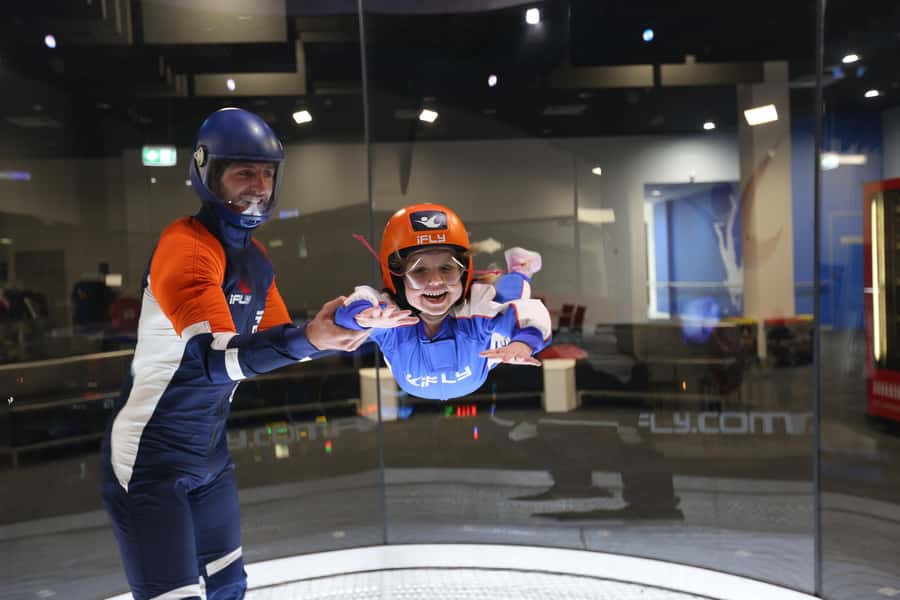
This is one of those activities that sounds wild until you see it in person. Instead of climbing into an aircraft, you step into a giant glass tunnel where powerful fans create a steady column of air. That airflow supports you as you lean into it, so you float and move with the instructor guiding your body position.
The appeal is simple: you get the thrill of free-fall movement without the plane, the chute timing, or the long wait that comes with jumping from above. You also get structure. You’re not just standing there hoping for the best. You’re trained, geared up, and walked into the airflow with clear instruction.
If you’ve had nerves about heights, this is exactly the kind of setup that can help. One verified booking mentioned they beat their vertigo thanks to the experience. That tracks, because you’re learning in a controlled environment where the focus stays on technique and breath, not on distance to the ground.
The other thing you should know: this is a short, energetic session. It’s built for momentum. You’ll suit up, fly, learn, fly again. If you want a long, slow adventure, this may feel like a quick hit rather than an all-day event.
Price and Value for $84: What You Get for Your Money
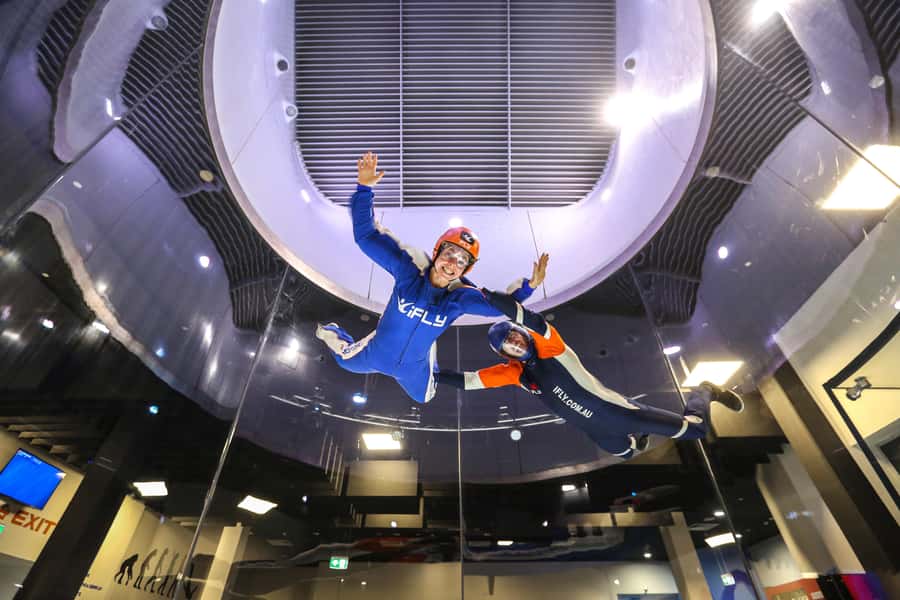
The listed price is $84 per person, and for that you get a lot more than a ticket to watch. Your booking includes 2 flights, a detailed training session, equipment rental, and personal assistance from your flight instructor. You also get a personalized flight certificate, which is a nice keepsake when you want something more than a phone photo.
Think of the value like this: you’re paying for a professional guided experience in a controlled system, with staff support and all the safety gear handled for you. Many thrill activities charge for the instruction separately, or they limit practice time. Here, the structure is built around coaching during actual airflow.
If you compare it to real skydiving, this doesn’t replace the exact sensation of exiting an aircraft, but it does give you the free-fall-style body control. And because it’s indoors, you don’t have to worry about weather changing your day.
There is also a practical value angle: you can do it as a clean half-day plan. One booking noted easy access from central Sydney via Penrith Station and then a short bus ride. That can make it feel more doable than activities that strand you with complicated transport.
A small note: you can buy video recordings afterward, but those are not included. If you love having footage, you might want to budget for it later.
Weighing this one up? Here is how it sits against a few Sydney favourites:
- Sydney: Opera House Guided Tour with Entrance Ticket
★ 4.8 · 8,312 reviews - All Inclusive Blue Mountain,Scenic World,Lunch,Koalas,ferry
★ 5.0 · 7,832 reviews - From Sydney: Blue Mountains Full-Day Trip
★ 4.5 · 4,471 reviews - Sydney Opera House Official Guided Walking Tour
★ 4.5 · 3,770 reviews
Getting There and Timing: Don’t Show Up Late
Your meeting point can vary depending on the option you book, so you’ll want to check your specific confirmation details. The big timing rule is clear: you must arrive at least 1 hour before your flight time. Late arrivals can’t be refunded.
That hour isn’t just red tape. It gives you time to check in, meet your instructor, handle paperwork and fitment, and do the quick safety briefing without rushing. If you’ve ever done an activity where you felt flustered because you were arriving at the last second, you’ll appreciate how this is designed to prevent that.
The session duration is listed as 90 minutes, and it’s tied to available starting times. So if you’re planning around meals, school, or other tours, pick a start time that gives you buffer.
What to Wear, What to Bring, and Who Should Check Limits First
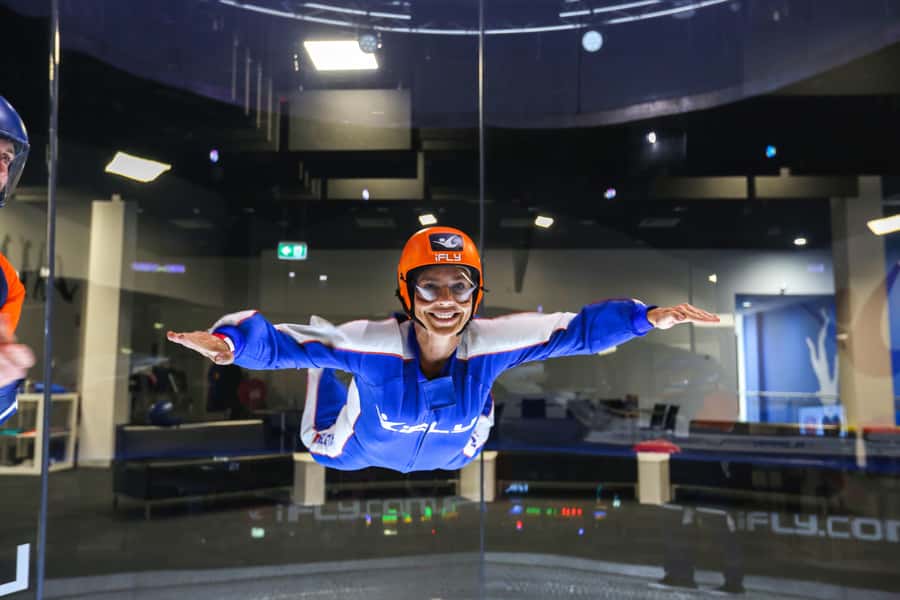
This activity has straightforward prep. Bring comfortable clothes and closed-toe shoes. That’s it. You don’t need bulky gear or special clothing because you’ll be provided with the flight suit, helmet, and goggles.
Now the limits. These matter because they are about safe operations and instructor guidance, not a mood or marketing decision.
Not suitable for:
- Children under 3 years
- Pregnant women
- People with back problems
- People with heart problems
There are also height and weight limits:
- If you are under 180 cm tall, you must weigh less than 105 kg
- If you are over 180 cm tall, you must weigh less than 115 kg
- People over 230 lbs (104 kg) are not suitable
Yes, those numbers overlap closely. The safest move is to re-check both constraints before you book, especially if you are near the edges.
Medical caution notes:
- Anyone with prior heart problems, neck, or back injuries should consult a doctor before their flight date.
- People with previous shoulder dislocations are strongly advised not to fly.
Also, paperwork:
- Anyone 18 and over must sign a liability waiver.
- Anyone under 18 needs a parent or guardian to sign the waiver.
On the good-news side, the facility is wheelchair accessible, and the information specifically says people with certain physical impairments, including amputation and paraplegia, can fly. If you fall into a category that needs extra consideration, it’s smart to contact the operator before you arrive so the team can advise you.
Arriving at iFLY: Check-In, Gear-Up, and the Safety Brief
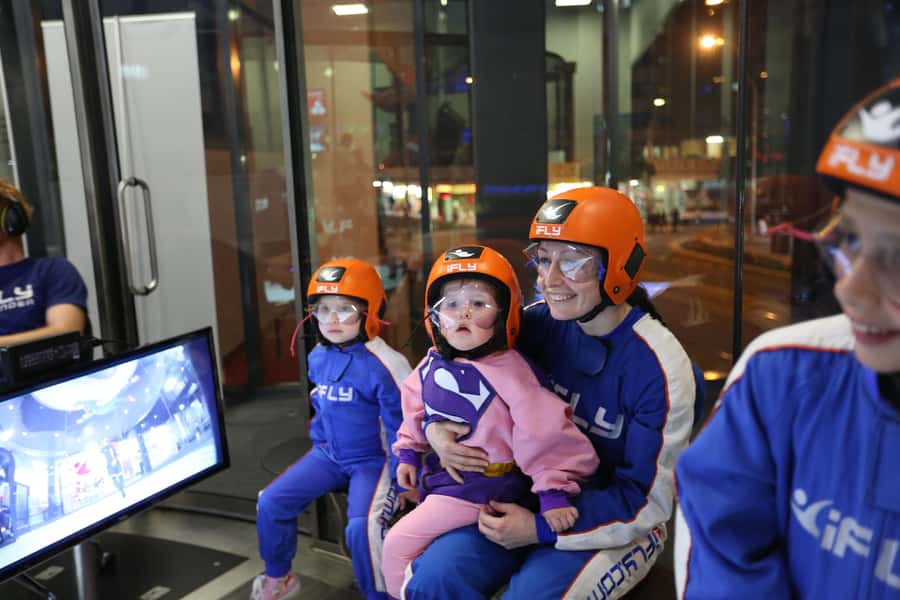
When you reach the indoor center, you sign in at reception and meet your instructor. The process is designed to feel calm and step-by-step.
You’ll get a quick safety briefing and then gear up in a flight suit, helmet, and goggles. This is more than a costume moment. The suit helps you move smoothly, and the helmet and goggles keep you comfortable in the airflow.
Then comes the real learning phase. You’ll be guided into the airflow and asked to lean into the wind as it lifts you into position. You don’t need special talent. What you need is listening, staying relaxed, and following the body cues.
This is also where that professional vibe shows up in real life. One booking praised how well-organized and professional the staff were, and another highlighted a friendly, attentive coaching style. That matters because in a wind tunnel, confidence is a safety tool.
Flight One: How You Learn the Skydiver Body Position
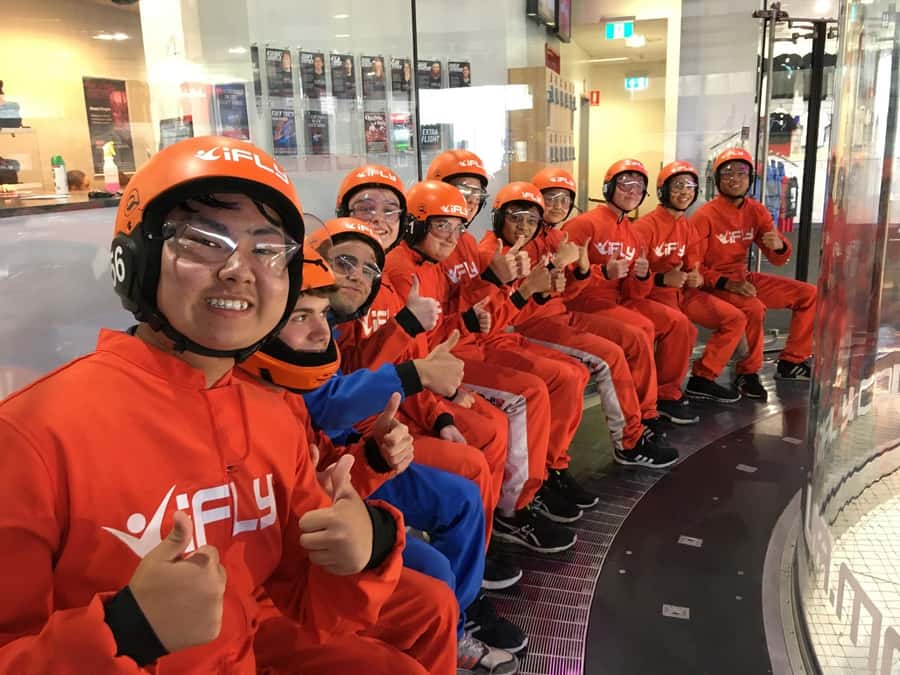
Your first flight is the training run. You’ll get the feeling of being supported by air, floating with no physical connection to the ground in the normal way. The sensation is often described as addictive, because it feels so close to the real thing while being controlled.
Expect to focus on:
- Leaning into the airflow so your body sits correctly in the column of air
- Using arm and leg positions that change how stable you are
- Breathing and staying calm while your instructor makes adjustments through cues
Most people go in thinking they’ll just flail. The truth is you’ll learn quickly. The airflow gives you immediate feedback. If your body position is off, it shows right away, and your instructor helps you correct it.
One useful mindset: treat this first flight as your calibration. Your goal isn’t perfection. It’s learning what feels right. You’ll often leave flight one realizing you were more capable than you expected.
And if you’re nervous, that’s normal. One verified experience directly mentioned they beat their vertigo through the process. The environment doesn’t ask you to jump into uncertainty. It asks you to control small movements in the air.

Flight Two: Repeat Practice and Why It Matters
The second flight is where you get real progress. You don’t just repeat the experience. You build on what you learned in the first attempt, usually with better control and more confidence.
In other words, those 2 flights are not just about doubling fun. They’re about learning faster.
You’ll be guided again into the airflow, and you’ll practice flying your body with instructor support. The experience is designed so you can feel that free-fall style movement, then improve your technique so it feels more natural on the second run.
Some people will notice the session is still time-limited. One booking called it a little short, which is fair. If you want more flying time beyond two flights, look at the package options—there’s a value package that includes extra time, and a group option too. If you’re not sure, I’d rather you choose the option that matches how you react to adrenaline: do you want a quick thrill, or do you want to get better and better?
The Certificate and the Memories You Can Keep
At the end, you get a personalized flight certificate. It’s a small thing, but it’s a good souvenir because it marks what you actually did during the session, not just that you were nearby.
If you like photos or video, know that recordings are available for purchase, but they aren’t included. Some people will love that upgrade. Others will skip it and rely on personal photos you take before or after.
Either way, the big memory isn’t the footage. It’s the moment you realize your body can control itself in the airflow. That feeling sticks.
Clean Facility, Family Energy, and Nearby Add-Ons
This is a modern setup. A verified review mentioned the facility is clean, and another noted it offers other activities like VR. That’s useful if you’re coming as a family and you want a bit more than one single activity.
It also helps to know this seems to work for repeat visits. One booking mentioned a son doing it multiple times and planning to do it again. That tells you something: once people find their comfort level in the wind tunnel, they tend to come back to improve.
For families, it’s a rare thrill because kids can be part of it too. Still, do read the age rules carefully—under 3 years isn’t suitable—so plan around the kids who can safely participate.
Who This Is Perfect For (and Who Should Skip It)
This experience is ideal if you want:
- A first-time taste of free-fall body control, without jumping from a plane
- A guided activity where the instructor actively helps you learn
- A short, high-energy outing that fits into a day in Sydney
It’s also a smart choice if you’re anxious about heights, because you can focus on technique inside a stable airflow. One verified participant credited the experience with conquering vertigo, which is exactly what you want from a training-style thrill.
Who should skip or check carefully:
- Anyone with back problems, heart problems, or pregnancy
- Anyone with shoulder dislocations (advised not to fly)
- Anyone near the weight/height limits who hasn’t confirmed eligibility
And if you’ve had neck or back injuries, or you have prior heart concerns, consult a doctor. This activity has a safety system, but the operator can’t replace medical advice.
Should You Book This Indoor Free-Fall in Sydney?
Book it if you want a guided adrenaline experience that teaches you how to move in the air, twice, in about 90 minutes. The included gear, the instructor help, and the two-flight format make the $84 price feel more like instruction-and-time than just a ticket.
Skip it (or get advice first) if you fall into the medical categories listed, or if you’re unsure about meeting the height and weight requirements. This is not an activity to guess on—check before you commit.
And if you’re making a day out of it in western Sydney, it’s a good target because access can be simple. One review pointed to the easy route from Sydney via Penrith Station plus a short bus ride, which is the kind of practical detail that makes activities like this feel less of a mission.
If you’re craving the thrill but want the learning part to be real, indoor wind-tunnel free-fall in Sydney is a solid bet.
FAQ
How many flights are included?
You get 2 flights for 1 person, along with a training session and hands-on assistance from your flight instructor.
How long does the experience take?
The duration is 90 minutes. You should check availability for starting times.
What should I bring and wear?
Wear comfortable clothes and bring closed-toe shoes. You’ll be provided with equipment rental including a flight suit, helmet, and goggles.
How early do I need to arrive?
You must arrive at least 1 hour before your flight time. Late arrivals cannot be refunded.
Are there age limits?
It is not suitable for children under 3 years. Anyone under 18 must have a parent or guardian sign the waiver.
Is it wheelchair accessible?
Yes, the facility is wheelchair accessible, and people with certain physical impairments, including amputation and paraplegia, can fly.
Are cancellation and pay-later options available?
Yes. You can cancel up to 24 hours in advance for a full refund. You can also reserve now and pay later, which means you pay nothing today.
More Tour Reviews in Sydney
- Blue Mountains Small-Group Tour from Sydney with Scenic World,Sydney Zoo & Ferry
★ 5.0 · 3,709 reviews